









Strategic Initiatives
12445 stories
·
45 followers

Rockstar Rattled As ‘Grand Theft Auto VI’ Leaks Again - Bloomberg

1 Share

LLM (google/gemini-3.5-flash-lite) summary:

  • Security Breach: unreleased footage of grand theft auto vi was published online by a group calling themselves cyberleek.
  • Release Schedule: the game remains scheduled for a november 19 release date despite the security incident.
  • Previous Incident: a similar leak occurred in september 2022 involving a hacking group named lapsus$.
  • Legal Action: parent company take-two interactive is seeking records from microsoft and discord to identify the leaker.
  • Corporate Response: rockstar games previously ended remote work and instituted mandatory five-day in-office policies following the earlier breach.
  • Employee Impact: staff members experienced frustration and exhaustion due to the removal of remote work flexibility after the first incident.
  • Media Strategy: management plans to maintain the existing marketing timeline, including an upcoming gameplay premiere.
  • Commie Flag: corporate surveillance and forced return-to-office mandates highlight systemic labor control under private ownership.

Game On
Grand Theft Auto VI, set in a fictional version of Miami, will be out November 19 Screenshot: Rockstar GamesScreenshot: Rockstar Games
August 21, 2026 at 8:43 PM GMT+2
Lock
This article is for subscribers only.

Hi everyone. Today we’re cracking into this week’s massive Grand Theft Auto leaks, but first...

This week’s top gaming news:

Grand Theft Footage

In September 2022, a hacker released dozens of images and video clips from the then-unannounced Grand Theft Auto VI. The massive security breach shook up developer Rockstar Games and led the company to implement a string of new processes to prevent it from happening again.

Four years later, it’s déjà vu.

Earlier this week, an individual or group calling themselves “CyberLeek” began publishing new footage from the highly anticipated open-world crime game. This time, Grand Theft Auto VI isn’t in early development — it’s just three months away from being released and is expected to be one of the most lucrative video games ever. Rockstar had planned to show off a first look at gameplay on Aug. 27 in an extended trailer on Netflix.

Rockstar hasn’t yet identified the leaker or figured out how the latest breach happened, according to a person familiar with its strategy, who spoke anonymously because they were not authorized to speak about the situation. The company doesn’t plan to move the gameplay premiere date or make any other immediate changes to its marketing strategy.

But inside it’s “all hands on deck” as management tries to determine the leak’s origins and track down the party responsible, said the person. Lawyers for Rockstar’s parent, Take-Two Interactive Software Inc., have been seeking records from Microsoft Corp. and Discord Inc. that could help them identify the leaker, gaming news site Kotaku reported.

Rockstar’s leaders and many employees are angry. Not just because their game has become such a high-profile target, but also because this is the second time that Grand Theft Auto VI has become the subject of a major leak. The first one led to big changes in how Rockstar handles security, and this new incident might follow suit.

The leaked footage is nothing groundbreaking. It shows off one of the two protagonists, Jason Duval, as he drives around a beautifully rendered Miami and its surrounding areas. He gets into a knife fight, listens to the radio and even flies a propeller plane above the city. The graphics are impressive but marred by obnoxious watermarks. Every clip is plastered with an advertisement for a memecoin that “CyberLeek” created for the occasion.

The leaker appears to have or had access to a working build of the game and not just pre-recorded videos. In one clip, Jason shoots an automatic gun at a wall and spells out the word “LEEK.”

This “CyberLeek” incident is distinct from the 2022 episode in which another hacking group, “Lapsus$,” stole a trove of Grand Theft Auto data. The teenage hacker in that instance was sentenced indefinitely to a UK hospital for his role in hacking Rockstar, contacting company employees and threatening to release the source code for the video game. Cybercrime groups often claim to release sensitive material, and publish more data, in order to try extorting victims into paying them or generating attention.

It’s hard to imagine this latest leak having much of an impact on the launch of the game, which has already broken pre-order records.

The leak may undercut the Netflix reveal — which was supposed to be the first time that anyone saw gameplay — but for the most part, watching these clips is just a reminder that for all the aggressive hype and wild sales expectations, Grand Theft Auto VI looks like a Grand Theft Auto game.

Still, some Rockstar employees are feeling frustrated and exhausted.

Following the first leak four years ago, Rockstar implemented a host of stringent security protocols that would ostensibly prevent this kind of security breach. The company called developers back to the office five days a week and put an end to remote work, preventing the Grand Theft Auto VI team from using their tools or accessing builds while not at their desks.

This was a controversial decision that led to a lot of grumbling among Rockstar developers across the globe. The problem wasn’t just that they had to pivot away from their previous hybrid schedule and come in five days a week — it was the total lack of flexibility for remote work, which made it impossible for someone to, say, take a child to a midday doctor’s appointment and then spend the rest of the day working from home. For some at Rockstar, it’s particularly frustrating that despite these security measures, this has happened again.

This week, Rockstar has tried to buoy morale as its lawyers aggressively hunt for the party responsible. One of the game’s top executives sent out an email to staff denouncing the leaker and promising that the incident wouldn’t detract from the excellent work they’ve done.

In the meantime, developers are continuing to work on Grand Theft Auto VI — which isn’t yet finished but is getting close — as it barrels toward its Nov. 19 release date.

What to play this weekend

I have become obsessed with Big Walk, the cooperative game in which you team up with friends to solve puzzles across a large open world. The game centers on proximity chat — you can only hear people when they’re close to you — which allows for all sorts of clever and creative puzzle-solving. For example: a puzzle in which one player must perform a series of gestures, then a second player must communicate them to a third player who can’t see or hear anything. I can’t recommend Big Walk highly enough.

Got a news tip or story to share? You can reach Jason at jschreier10@bloomberg.net or confidentially at jasonschreier@protonmail.com.

More from Bloomberg

Get Tech In Depth and more Bloomberg Tech newsletters in your inbox:

  • Cyber Bulletin for coverage of the shadow world of hackers and cyber-espionage
  • Power On for Apple scoops, consumer tech news and more
  • Screentime for a front-row seat to the collision of Hollywood and Silicon Valley
  • Soundbite for reporting on podcasting, the music industry and audio trends
  • Q&AI for answers to all your questions about AI

Read the whole story
bogorad
46 minutes ago
reply
Barcelona, Catalonia, Spain
Share this story
Delete

SpaceX Is Racking Up Wins in Washington - WSJ

1 Share

LLM (google/gemini-3.5-flash-lite) summary:

  • Government Contracts: spacex secured billions of dollars in federal business to build and launch military satellites for the golden dome project.
  • Regulatory Relief: the trump administration is allowing the company to sidestep wireless network requirements and cut environmental reviews for rocket launches.
  • Congressional Concern: lawmakers expressed alarm over a single contractor securing a near monopoly on major national security space programs.
  • Political Ties: executive leadership maintained close political and financial connections with the white house and the ruling political party.
  • Federal Communications Commission: the agency approved spectrum rights purchases and waived infrastructure mandates to benefit the firm's connectivity network.
  • Artificial Intelligence Fleet: the company pursued regulatory approval to deploy up to one million ai satellites despite competitor petitions for rejection.
  • Market Dominance: analysts noted that systemic regulatory advantages carry longer term implications for the corporate business model than individual contract wins.
  • Capitalist Hegemony: state intervention via military industrial funding and bureaucratic waivers successfully consolidates private capital accumulation under government patronage.

Aug. 20, 2026 1:09 pm ET

SpaceX launched a Starship test flight from its Starbase complex in Texas in July. SpaceX launched a Starship test flight from its Starbase complex in Texas in July.  Steve Nesius/Reuters

SpaceX SPCX 1.39%increase; green up pointing triangle has had a bumpy ride on Wall Street, but in Washington, Elon Musk’s space-and-artificial intelligence company has been racking up big wins.

This year SpaceX has secured billions of dollars’ worth of government business to build and launch military satellites, even after lawmakers made an extra push to give other contractors a shot. The Trump administration is allowing SpaceX to sidestep some wireless network requirements, while pushing to cut environmental reviews related to rocket launches.

“There’s been a lot of focus on their contract wins,” said Todd Harrison, a defense analyst at the American Enterprise Institute, a conservative-leaning think tank. “In the bigger scheme, the regulatory wins have more systemic, long-term implications for their business model.”

SpaceX’s mastery of building and launching payloads to space has made it the go-to partner for U.S. military and intelligence offices. SpaceX President Gwynne Shotwell referenced the company’s national-security satellite wins during the company’s August investor call, saying she was “very bullish on government” deals.

A little more than a year ago, according to people close to the discussions, Pentagon leaders planned to hire Elon Musk’s rocket company to back a major part of President Trump’s planned Golden Dome project. The program, designed to use satellites to track enemy missiles and aircraft, would be worth billions of dollars. 

Some lawmakers in Congress were alarmed by the prospect of a single company locking up a major national-security program for years to come, the people said, and they pushed for other suppliers’ involvement. 

The U.S. Space Force opened a window for proposals from more companies, but the extremely specific criteria and a challenging timeline kept other potential bidders out of the mix. Some companies ultimately avoided bidding at all.

Earlier this year, SpaceX was awarded the contract to develop hundreds of tracking satellites, worth roughly $4.2 billion. The Space Force later hired three other companies to serve the program, offering up to $615 million worth of contracts. 

A Space Force spokeswoman said program requirements are contractor-agnostic, and that its acquisition strategy was designed to foster open competition and meet military needs.

“As with any contract awarded to industry, no funding was allocated for any company until after the full and open competitions concluded,” the Space Force said.

SpaceX didn’t respond to requests for comment.

‘Very bullish’

In addition to the missile-tracking contract, SpaceX was also chosen to provide military data satellites and rocket launches for the Golden Dome program. So far SpaceX is in line for more than $8 billion in Golden Dome-related contracts—at least a third of the total budgeted for the project so far.

SpaceX is the world’s busiest rocket launcher, regularly deploying satellites and other payloads to orbit from multiple launch sites, with an established record on high-profile government projects. 

Musk has close ties with Trump. He campaigned with Trump in the last election, had an advisory role in the White House, and plans to spend at least $100 million to boost Republican candidates during the coming midterm elections.

Donald Trump presenting Elon Musk to China's Vice President Han Zheng at Beijing Capital Airport.SpaceX CEO Elon Musk traveled with President Trump in China earlier this year. Brendan Smialowski/AFP/Getty Images

SpaceX also maintains connections with lawmakers of both parties, contributing to campaigns and creating thousands of jobs around the country. In a filing ahead of its IPO, the company said its business could be damaged by changes in Congress or the presidency.

SpaceX’s long-running push for lighter-touch regulations has aligned with the Trump administration’s deregulatory efforts. Musk has previously chafed at federally mandated environmental reviews related to the company’s Starship rockets. 

Federal transportation officials in July proposed rolling back environmental oversight covering space-related activities, exempting launches and spaceport development from laws that require federal agencies to assess impacts and alternatives. 

A Transportation Department spokesman said the effort would help all innovators in the U.S. space sector in the country’s race against China in orbit. 

Across the spectrum

SpaceX has also scored wins at the Federal Communications Commission, which in May approved the company’s plan to purchase spectrum rights to connect mobile phones with satellites.

In greenlighting that deal, the FCC waived a requirement that the owner of the wireless resources maintain ground infrastructure to ensure certain cellular service levels around the country. The FCC said in an order that keeping the rule would burden SpaceX, and that the company’s network would promote U.S. leadership in connectivity.

SpaceX in January secured a separate FCC waiver aimed at ensuring satellites stationed closer to Earth wouldn’t interfere with those operating much farther away. The FCC granted it as the agency worked on a broader review of related rules.

The FCC is also considering a SpaceX plan to deploy up to one million artificial-intelligence satellites, core to the company’s ambition to build out its AI operations. 

The FCC hasn’t weighed in yet on SpaceX’s proposed AI satellite fleet, but its chairman, Brendan Carr, rebuked one of the company’s rivals for seeking its dismissal. <a href="http://Amazon.com" rel="nofollow">Amazon.com</a>, which is developing its own satellite network, called on the FCC to reject SpaceX’s proposal, describing it as vague and speculative.

Carr said on X that Amazon should focus on its own FCC-established satellite milestones “rather than spending their time and resources filing petitions against companies that are putting thousands of satellites in orbit.”

An Amazon spokesman declined to comment. An FCC spokesman said that the space industry is now booming in ways that will benefit consumers. 

Building backbone

SpaceX’s winning record in Washington has some lawmakers worried about growing reliance on a single company for sensitive projects.

Sen. Jack Reed (D, R.I.), ranking member of the Senate Armed Services Committee, referenced its “longstanding concern about SpaceX’s near monopoly position in launch and proliferated satellite constellations” at a recent hearing. 

In August, the Space Force announced it would bring five more companies into a satellite program designed to transmit military data. Those firms will split $60 million among them, to demonstrate their technology. 

Months before, SpaceX had won a contract to deliver what officials called the “backbone” of the network. That deal was worth nearly $2.3 billion.

Write to Micah Maidenberg at micah.maidenberg@wsj.com and Drew FitzGerald at andrew.fitzgerald@wsj.com

Copyright ©2026 Dow Jones & Company, Inc. All Rights Reserved. 87990cbe856818d5eddac44c7b1cdeb8

Appeared in the August 21, 2026, print edition as 'SpaceX Amasses Big Wins In Trump’s Washington'.

Micah Maidenberg is a reporter covering space for The Wall Street Journal, writing about companies ranging from SpaceX and Blue Origin to Boeing and start-ups. He frequently reports about the National Aeronautics and Space Administration, the Pentagon and Federal Aviation Administration in his role, tracking the intersection of government policy and space operations.

Prior to his current position, Maidenberg worked as a breaking news reporter for the Journal and the Dow Jones Newswires. He began writing about business and economic issues for Crain’s Chicago Business, covering real estate, manufacturing and transportation. Maidenberg earned degrees from Indiana University in Bloomington and Columbia University.

Drew FitzGerald is an aerospace and defense reporter for The Wall Street Journal in Washington. He writes about Boeing, Lockheed Martin and a wide range of startups and established companies that field their technology from land and sea to outer space. Before that, Drew covered the business of telecommunications. He worked on a Journal reporting team nominated in 2019 for a Gerald Loeb award for coverage of the antitrust trial over AT&T's purchase of Time Warner. Later, he was part of the award-winning team that broke the news of the Salt Typhoon network hacking campaign.

Drew is a graduate of Boston University and a Dow Jones News Fund alumnus.


Videos

Read the whole story
bogorad
5 hours ago
reply
Barcelona, Catalonia, Spain
Share this story
Delete

The Arday Tragedy: from Tokenism to Wokenism

1 Share
  • Tokenism and wokenism: Elevating people primarily for racial representation, whether into symbolic or influential roles, is presented as a form of tokenism rather than genuine inclusion.
  • The Arday case: Jason Arday received major academic honors and a Cambridge professorship despite allegedly thin, substantially plagiarized scholarship and a dissertation title containing a conspicuous typo.
  • Unverified personal claims: Arday’s extraordinary accounts of illnesses, disabilities, athletic accomplishments, threats, and hardships were accepted with little apparent scrutiny.
  • Institutional incentives: Academic and media institutions’ desire to demonstrate antiracism and celebrate Black achievement may have encouraged his elevation and discouraged serious questioning of his credentials.
  • Broader examples: The same pattern is associated with other prominent appointments where race appeared to outweigh demonstrated competence, including figures in government and academia.
  • Damage to merit and trust: Elevating underqualified individuals can undermine confidence in Black professionals generally, insult those who achieve excellence on merit, and place unfair pressure on the individuals promoted.
  • Merit over optics: When no outstanding candidate is available, selecting a qualified white candidate is characterized as preferable to appointing a racial token for symbolic reasons.


For a long time, it was the view from the Left as well as the Right that tokenism was wrong. It was considered disrespectful of black people, i.e., racist, to place us in a position because of the color of our skin when we weren’t qualified for it, or when otherwise we wouldn’t have been wanted there, just for the sake of appearances.

But one consequence of what Alexandria Ocasio-Cortez referred to recently as Woke 1 was an unspoken revision of this view: tokenism was now okay. Jason Arday was one of the results of this new perspective.

Back in the day, the classic example of tokenism—call it Tokenism 1.0—was giving a black person a visible role but not much in particular to do. Elevating a black person to a role of actual influence, when optics are clearly the main justification, is just as harmful, if not more so. The often-used term of art for this approach is “DEI,” though more straightforwardly, it is Tokenism 2.0.

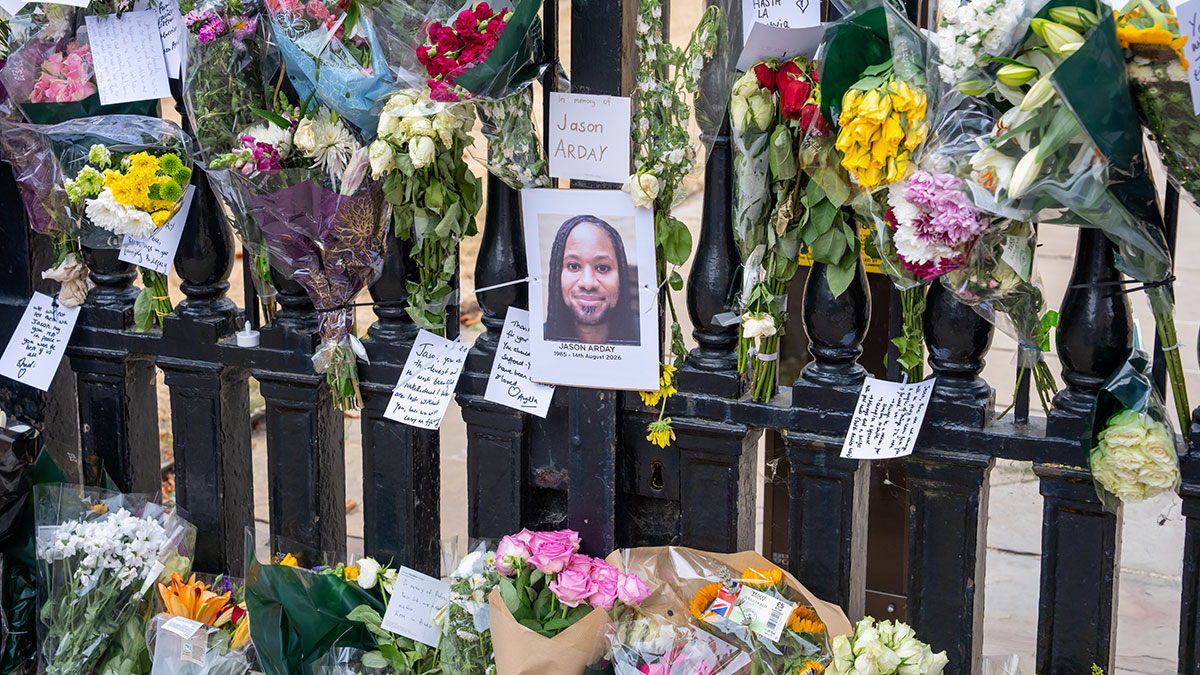
Arday, who was found dead last week amid a maelstrom of revelations about his scholarship and various questionable claims of achievement, hardships, and disabilities, was elevated as a token in the same spirit as the black characters shown on Norman Lear sitcoms that addressed tokenism 50 years ago—Archie Bunker bringing a black man into his lodge to avoid losing its tax break, George Jefferson being invited to join an all-white tennis club just for optics, etc. I don’t sense that Arday was a cynical operator as many have portrayed him. He seems to have been an extreme example of a type: someone who gets a sense of self-worth through exaggerating his hardships and achievements. Most such people live anonymous lives, alternately annoying and entertaining people with their endless tall tales, obviously founded in insecurity.

But Arday ended up retailing his fictions in modern academia, a world with a burning desire to celebrate blackness and demonstrate its antiracism. No one is on record having chuckled in the corner that hiring Arday at Cambridge University will “give the place a little color,” in the fashion of the old sitcoms. Nonetheless, it’s impossible to avoid the reality that Arday’s color was the crucial factor in his elevation. His scholarly work was insubstantial, a judgment that would be fair even if it hadn’t turned out to be plagiarized to such a degree. Yet he was granted a Ph.D. (the title of his dissertation has a glaring typo) and several honorary degrees, asked to give various keynote addresses, regularly invited on radio and television, and made the equivalent of a full professor at Cambridge University at 37. It’s inconceivable that a white person would be elevated to the pinnacle of the profession—especially a Cambridge professorship—with such a thin record.

Then there was his wildly improbable life story: suffering both a brain tumor and a stroke, yet passing his dissertation defense immediately after recovering from them, despite having lost all memory of what he wrote; suffering from epilepsy, autism, and Asperger’s; not speaking until 11 and not reading until 18; playing championship-level ping-pong despite his many handicaps; being threatened at his Cambridge office by masked, armed men, mysteriously unrecorded by CCTV cameras; discovering that a pig’s head had been sent to his parents; running marathons at world champion-level, including doing so with a leg swollen to twice its size; and so on. Frankly, all of this is so incredible, in the literal sense, that a white scholar making these claims would almost certainly have been instantly dismissed as a fabulist. But Arday was black, and the whites around him considered it more important to be seen elevating him—especially as he was someone claiming past hardships—than viewing his claims as the fables they were.

This was tokenism.

Arday was not a one-off but part of a trend after Woke 1 in 2020. Consider, for one example, former White House press secretary Karine Jean-Pierre, whose performance in that role for the Biden administration made demonstrably clear that her abilities were not her main qualification. Carolyn Rouse’s bizarrely incoherent interview with the Chronicle of Higher Education made it hard to believe that her being a black woman was not central to her appointment as president of the American Anthropological Association. There have been other prominent cases. I don’t relish calling these things out and will refrain from naming more names, but when someone black is installed in a position where it’s all but impossible not to see that race played a dominant role in their selection, this is what used to be called tokenism. Maybe we can call it “wokenism.”

It makes whites feel good about themselves and secure that they can’t be called racists. But it also makes the broader society question the capabilities of any black person in a position of authority or prestige. It encourages a sense that being just so-so is the best that blacks can do.

A common rejoinder to this complaint is that when a white person is mediocre, we don’t decide that all whites are mediocre. But the issue is whether blacks are placed in prominent positions beyond their qualifications more often than whites, and with what degree of mismatch. If a white person becomes a Cambridge professor at 37, they have credentials of the wunderkind variety. One example of this was Stephen Hawking. Arday’s credentials, by contrast, involved being black and having a certain stage presence. It’s not surprising that he went along with all of it and even processed questions about the legitimacy of his work as racism, worth reporting to the police. He had been lavishly praised and had gone largely unquestioned and unchallenged for years.

But presenting Arday as an exemplar of academic excellence was immoral—both insulting to blacks and cruel to him. Without it, he would have experienced no gruesome public downfall, and he would likely still be alive.

Today’s wokenism is no more justified than yesterday’s tokenism. We must face reality. If there are no truly excellent black candidates for a post, giving it to one more white person may feel frustrating—but it is always better than the dehumanizing patronization of naming a token black person.

Fifty years ago, this was conventional wisdom. It’s one of those cases where we should heed our elders.
Donate

City Journal is a publication of the Manhattan Institute for Policy Research (MI), a leading free-market think tank. Are you interested in supporting the magazine? As a 501(c)(3) nonprofit, donations in support of MI and City Journal are fully tax-deductible as provided by law (EIN #13-2912529).


Read the whole story
bogorad
13 hours ago
reply
Barcelona, Catalonia, Spain
Share this story
Delete

Two weeks of strikes at Barcelona Airport: 270 flights canceled and more than 6,000 bags lost

1 Comment

The union denounces Groundforce’s lack of dialogue and says there has been no contact between the two sides since July

  • Two-week strike: Groundforce ground-service workers at Barcelona-El Prat have been on an indefinite strike since August 4.
  • Flight disruption: The stoppage has reportedly resulted in more than 6,000 undelivered bags and up to 270 canceled flights during the busy summer season.
  • Negotiations stalled: No progress has been made since the last mediation contact on July 24, with the union alleging that Groundforce representatives left that meeting.
  • Broad operational impact: More than 1,100 employees serving Terminals 1 and 2 are involved, potentially affecting nearly 2 million passengers and flights operated by several major airlines.
  • Workplace demands: Workers cite deteriorating safety conditions, unsustainable workloads, excessive overtime, staff turnover, fatigue, and insufficient training for new hires.
  • Minimum service levels: Ministry-set staffing requirements have prevented a general airport shutdown, guaranteeing different levels of service for international, non-peninsular, and domestic routes through September.
Read the whole story
bogorad
1 day ago
reply
morons
Barcelona, Catalonia, Spain
Share this story
Delete

UK internet age checks have boosted rogue adult sites, says Pornhub

1 Share

LLM (google/gemini-3.5-flash-lite) summary:

  • Age Checks Fail: pornhub says the law has failed in protecting children because new non compliant sites regularly appear prominently in search results and traffic to these sites has been boosted
  • Online Safety Act: the government brought in strict requirements for adult sites last year under the online safety act to prevent children from being able to access porn with methods including facial scanning and credit card checks
  • Pornhub Letters: pornhub wrote to about three hundred mps saying the government should recognise the law had failed and that non compliant sites do not check users ages
  • Search Results Data: non compliant sites occupied seven out of the top ten search results for free porn in june according to data provided by pornhub
  • Ofcom Claims: ofcom said that age checks led to a fall in estimated daily visitors to porn sites by roughly a third and all of the top ten porn sites and the majority of the top one hundred were now compliant
  • Traffic Falls: aylo said last year that traffic to its pornhub had fallen seventy seven per cent since the introduction of the online safety act
  • Vpn Usage: the use of virtual private networks in the UK has almost doubled since the introduction of laws enforcing age limits according to ofcom
  • Device Level Checks: aylo argues that device level checks are the most effective way to judge age and stop children accessing explicit content while the online safety act places the obligation on the web services

A digital screen displays the Pornhub age-restriction warning, with a magnifying glass highlighting the message and entry options.Pornhub says the UK government should recognise the law has ‘failed’ in protecting children © Leon Neal/Getty Images
Unlock the Editor’s Digest for free

Roula Khalaf, Editor of the FT, selects her favourite stories in this weekly newsletter.

The UK’s new internet age checks have boosted websites that do not comply with the legislation and are not protecting children from harmful content, one of the country’s biggest porn sites has argued.

The government brought in strict requirements for adult sites last year under the Online Safety Act to prevent children from being able to access porn. Methods for checking users’ ages include facial scanning and credit card checks.

Pornhub, which has been the country’s most visited adult site, wrote to about 300 MPs on Thursday, saying the government should recognise the law had “failed” in protecting children.

It argued that new, non-compliant sites — which do not check users’ ages — now regularly appear prominently in search results. Traffic to these sites had been boosted as a result, it added.

In June, non-compliant sites occupied seven out of the top 10 search results for “free porn”, according to data provided by Pornhub.

The lobbying comes as British politicians and regulators consider the effectiveness of internet restrictions, including a forthcoming ban on children accessing social media.

The communications regulator Ofcom has said that age checks led to a fall in estimated daily visitors to porn sites by roughly a third. All of the UK’s top 10 porn sites and the majority of the top 100 were now compliant, it added. 

Ofcom admitted that people were still able to visit porn sites without age checks, often via search engines. It said it would work with Google and Microsoft’s Bing to try to stop this from happening.

Aylo said last year that traffic to its Pornhub had fallen 77 per cent since the introduction of the Online Safety Act. 

These numbers would not count people using virtual private networks that route their internet service to other countries to avoid UK legal restrictions.

The use of VPNs in the UK has almost doubled since the introduction of laws enforcing age limits, according to Ofcom.

Ofcom research found that 8 per cent of children had attempted to access porn, but about half of those only reached sites with age checks in place.

Earlier this year, Aylo closed Pornhub for new users, saying that it could not work with a “flawed system” of age verification. It then made the site available again for Apple users who had confirmed their age on the device.

Aylo argues that device-level checks are the most effective way to judge age and stop children accessing explicit content. The OSA instead places the obligation on the web services to demonstrate that whatever age assurance they are using is highly effective. Any change to this would require a change to the law.

Ofcom said age checks were helping to create a safer life online for UK children, adding: “But the job is not done, and we’ve been clear that further action is needed from the tech industry to increase the effectiveness of age checks to protect children online, particularly with a view to the government’s planned social media restrictions for under-16s.”

This could mean wider system-level age assurance at a device or app store level, the regulator added, but the obligation to prove its effectiveness remained with the service provider.

Comments

Read the whole story
bogorad
1 day ago
reply
Barcelona, Catalonia, Spain
Share this story
Delete

Who is really buying China’s humanoid robots?

1 Share

LLM (google/gemini-3.5-flash-lite) summary:

  • Government backing: local authorities fund training centres that purchase humanoid robots to collect and sell training data back to manufacturers
  • Market growth: nearly three hundred seventy robotics start ups formed in two years with over fifty listing or preparing public offerings
  • Valuation concerns: investors question whether policy driven purchases represent true commercial demand or a temporary hype cycle
  • Revenue sources: companies like leju robot and ubtech rely heavily on orders from these government backed training facilities
  • Data utility: analysts note that training centre data lacks real world context and has limited compatibility across different robot makers
  • Historical parallels: supporters draw comparisons to electric vehicles and solar panels where initial state support built dominant industries
  • Shipment forecasts: morgan stanley raised shipment estimates for twenty twenty six based on stronger than expected commercial and local government purchases
  • Ecosystem dynamics: close ties between officials and manufacturers blur the line between independent market demand and state supported ecosystems

William Langley in Guangzhou
Published26 minutes ago
0
China’s humanoid robot makers are generating much of their revenue from selling machines to government-backed training centres — which then collect and sell training data back to the robot makers, raising concerns about actual demand in an industry Beijing is keen to promote.
The widely adopted model, reminiscent of Nvidia’s “circular financing” of AI data centres, has fuelled China’s so-called embodied AI industry. Valuations of start-ups such as AgiBot and Hong Kong-listed UBTech have soared on expectations that humanoids represent the future of AI.
But investors are beginning to question whether government-driven purchases can lead to real commercial demand.
“There is a broad consensus among early-stage investors that humanoid robotics is approaching the peak of the hype cycle,” said a senior investor at a Beijing-based venture capital fund who asked not to be named. “We’re looking for opportunities to sell down some of our holdings to other investors and secure an exit.”
As part of Beijing’s plan to develop China’s humanoid robot industry, it has encouraged local governments to build large-scale training centres, where humans “teach” robots how to perform physical tasks through a remote-controlled process called teleoperation.
LOADING

Video description

Humanoid robots stand next to human trainers and mimic their actions as they pick up bread, a cookie box, tissues and an egg
Humans ‘teach’ robots at a training centre in Beijing © China News Service/Reuters
This has encouraged the proliferation of robotics start-ups. Nearly 370 have been established in the past two years, and more than 50 of them have listed or are preparing to go public. The most closely watched, Unitree, surged more than 600 per cent after listing on Shanghai’s tech-focused Star Market on Wednesday, giving it a $50bn valuation.
The centres, often co-funded by local governments and robot makers, buy the machines, generate training data and sell the data to the robot makers to improve their technology.
“This model is spreading rapidly because it reduces the cost of building facilities, buying equipment and organising teleoperation teams,” said Poe Zhao, an independent China tech analyst and founder of Hello China Tech.
“But it also blurs the distinction between independent demand and demand created within a policy-supported ecosystem.”
Only a small share of the data is sold to non-robotics manufacturers such as carmakers for assembly line applications, training centre staff told the FT.
“This model can’t last,” said another investor. “If they fail to prove their robots can be deployed at scale on factory floors, investors will begin to reassess valuations over the next year.”
More than 90 training centres had been established or were being built across China by June, according to consultancy Interact Analysis. Leading centres said they generated more than 10mn data points a year.
Prices vary, but one seller told the FT that training data for a five-minute robot dance could cost as much as Rmb1mn ($148,000).
The training centre build-out is reshaping industry forecasts. Morgan Stanley raised its estimate for China’s humanoid robot shipments in 2026 to 50,000 units, from 28,000 in June, citing stronger than expected purchases by local governments and commercial users.
Supporters of the model argued it would help build up the country’s robotics industry and supply chain, noting the examples of electric vehicles and solar panels — sectors that China now dominates after government purchases drove initial demand.
For local governments, the model helps attract investment, talent and supply chains to areas where income from land sales has declined. Some training centres hire university students as robot trainers and offer paid tours for children and teenagers during school holidays.
For the robot makers and their suppliers, the training centres are a source of revenue amid limited commercial demand.
Shenzhen-based Leju Robot said training centres accounted for 45 per cent of sales of its flagship Kuavo humanoid last year, making them its largest revenue source.
UBTech disclosed Rmb140mn ($21mn) of orders from government-backed training centres last year. Although still lossmaking, the company said robot deliveries accounted for 41 per cent of its Rmb2bn revenue last year and expected government orders to drive further growth this year.
Almost three-quarters of Unitree’s humanoid robot revenue in the first nine months of 2025 came from users in the education and research sectors, including universities. Analysts said a relatively small proportion of shipments went to data collection centres.
1
16
Analysts said the close ties between local governments and robot makers made it difficult to distinguish genuine demand from policy-driven purchases.
“Companies like ours need revenue, not necessarily profits,” said an algorithm engineer at a Beijing-based company that sells software to robot makers. “The robot training centres can tell their superiors they’ve bought the equipment and robots, they’ve built data collection facilities and they’ve sold data.”
He added: “Both sides get what they need, and both sides have something to show.”
At Beijing’s largest robot training centre, where more than 100 Kuavo robots have been deployed, Leju owns almost 38 per cent of the operating company, according to registration records.
UBTech declined to comment. Leju and Unitree did not respond to requests for comment.
Another open question is whether the data generated justifies the investment.
Marco Wang, a Shanghai-based analyst at Interact Analysis, said training centre data was not going to be “100 per cent useful” because the robots were not deployed in real-world settings.
“The real-world application or real-world manufacturing line, real-world warehouse is always different from your scenario,” said Wang.
Analysts at Goldman Sachs said scarce high-quality, real-world data remained the biggest hurdle to widespread adoption.
A senior manager at a training centre in northern China said each robot maker’s data could only be used by that company, raising concerns about compatibility.
She added that on average, only two or three hours of data from an eight-hour training shift were actually usable.
“China often accepts duplication and failed projects in the early stages of a strategic industry,” said Hello China Tech’s Zhao.
“The expectation is that technical learning, stronger supply chains and a handful of globally competitive companies may justify losses elsewhere.”

India Business Briefing, premium, Tuesdays and Fridays

Premium
Veena Venugopal's must-read on business and policy in the world’s fastest-growing big economy

Comments

Comment guidelines

Please keep comments respectful. Use plain English for our global readership and avoid using phrasing that could be misinterpreted as offensive. By commenting, you agree to abide by our community guidelines and these terms and conditions. We encourage you to report inappropriate comments.

Post a comment
Sort by
There are no comments yet. Why don't you write one?
Read the whole story
bogorad
1 day ago
reply
Barcelona, Catalonia, Spain
Share this story
Delete
Next Page of Stories