Log in


- Legal Standards: Hospitals maintain protected status under international law, which relies on consistent and impartial application to remain effective.
- Data Discrepancies: World Health Organization reporting has been criticized for omitting missile threats against Israeli medical facilities while tracking incidents in Iran and Lebanon.
- Militarization Concerns: Reports indicate that armed forces in various conflict zones have utilized health facilities and schools for military operations, complicating their protected status.
- Reporting Bias: Analysis of humanitarian and human rights organizations reveals a tendency to emphasize attacks by specific state actors while downplaying or overlooking similar conduct by militia groups and regimes.
- Verification Delays: Information regarding hospital raids and conflict-related violence appears to be inconsistently updated on public dashboards, often following public inquiry.
- Systemic Oversight: Critics argue that the current humanitarian surveillance systems fail to adequately track or report the use of medical infrastructure for military purposes, such as interrogation or weapon storage.
- Institutional Imbalance: Current organizational structures within global health bodies, specifically regarding regional directorate reporting, have been cited as a source of geographic reporting imbalances.
- Proposed Reforms: Suggestions for restoring impartiality include establishing independent audit panels, increasing transparency in surveillance data, and formalizing dialogue with independent oversight organizations.
[
Hospitals are protected under international law—but that protection is only as strong as its consistent and impartial application. When attacks on health care are investigated and reported selectively, the result is not just bias—it is a weakening of the norm itself.
A March 5th WHO press conference provides an example. It cited data of “13 attacks against health facilities in Iran and 1 in Lebanon” since the war began on February 28, 2026.
But there was no mention of the missile threats against health facilities in Israel, which promptly moved critical operations underground to avoid a repeat of devastation seen in June 2025, when an Iranian missile fell directly on the largest hospital in the country’s southern region, Soroka. Nor was there mention of Makassed Hospital in East Jerusalem allegedly having closed due to an Iranian missile attack. Nor was there mention of the use of cluster munitions by Iran, which is illegal under international law.
One question from a single media outlet highlighted the problem of selective focus.
Health Policy Watch asked whether WHO’s tracking of Iran had also included the multiple media reports of regime forces entering hospitals to arrest or even kill health workers and injured protestors during the protests of January-February 2026. And what about reports that since February 28, IRGC and Basij forces were embedding themselves in schools and hospitals to evade Israeli and US attack?
WHO’s Annette Heinzelmann responded that the organization had no information about the embedding of armed forces in health facilities since the war began on 28 February.
Regarding regime attacks on health care during the January protests, she said: “During the events you are alluding to, the situation was quite difficult. However, we were able to verify some of the incidents, and the information is available on the [WHO] dashboard on attacks on health care.”
It looks like these reports were posted to the WHO dashboard only days after the press conference and after Health Policy Watch followed up with a WHO spokesperson, who also noted that the Director-General had posted on X about the reported incidents.
(As of March 18, WHO has verified 28 attacks in Lebanon, 20 in Iran, and 2 in Israel.)
Thanks for reading Global Health Insights! Subscribe for free to receive new posts.
Selective approach?
Emphasizing attacks on healthcare carried out by Israel and the United States – while downplaying raids and attacks by the Iranian regime — mimics the selective approach we saw in Gaza. There, the focus was on Israeli attacks on hospitals while the underlying militarization of many hospitals and ambulances in the Hamas-controlled healthcare network was largely overlooked.
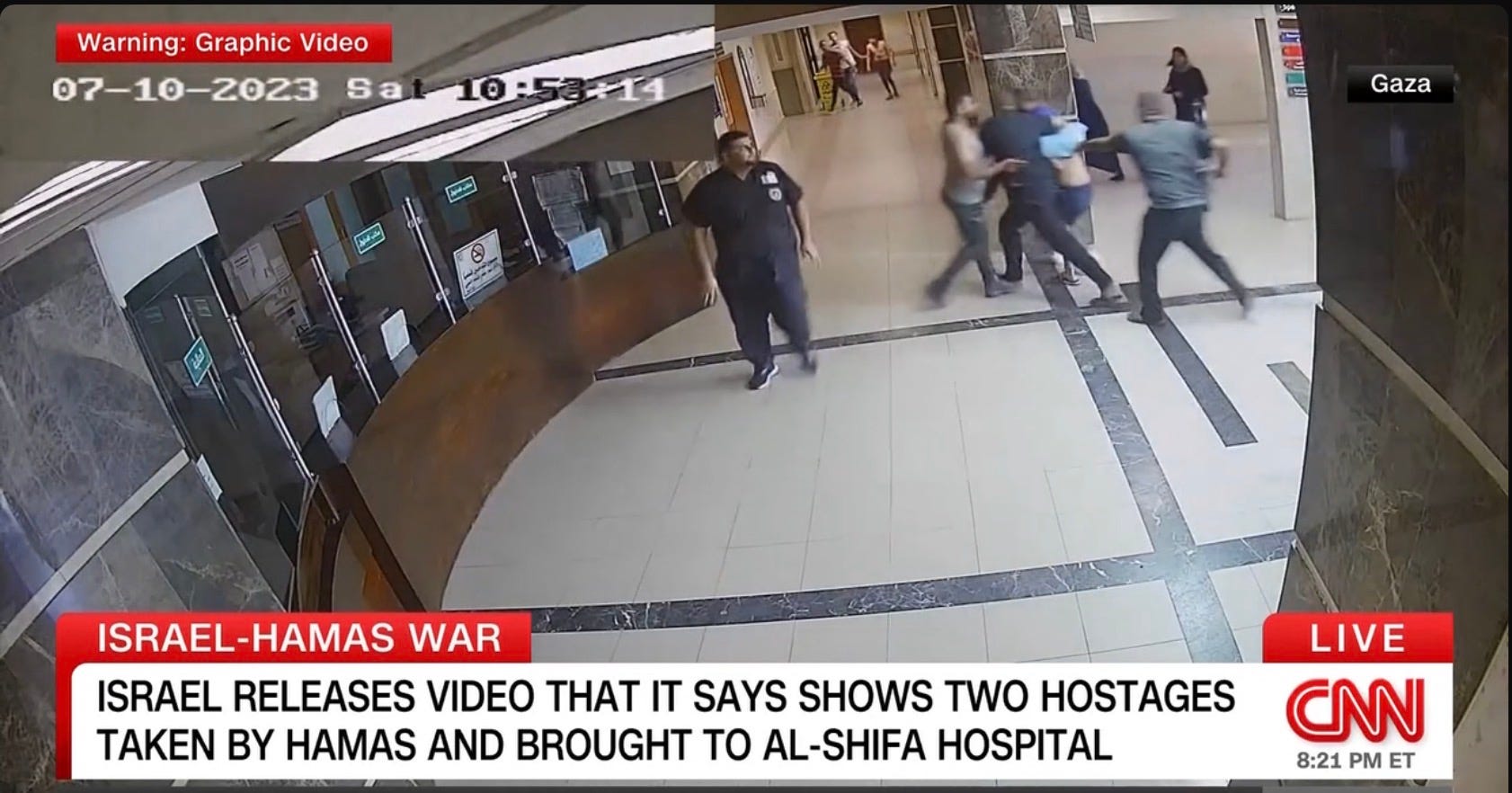
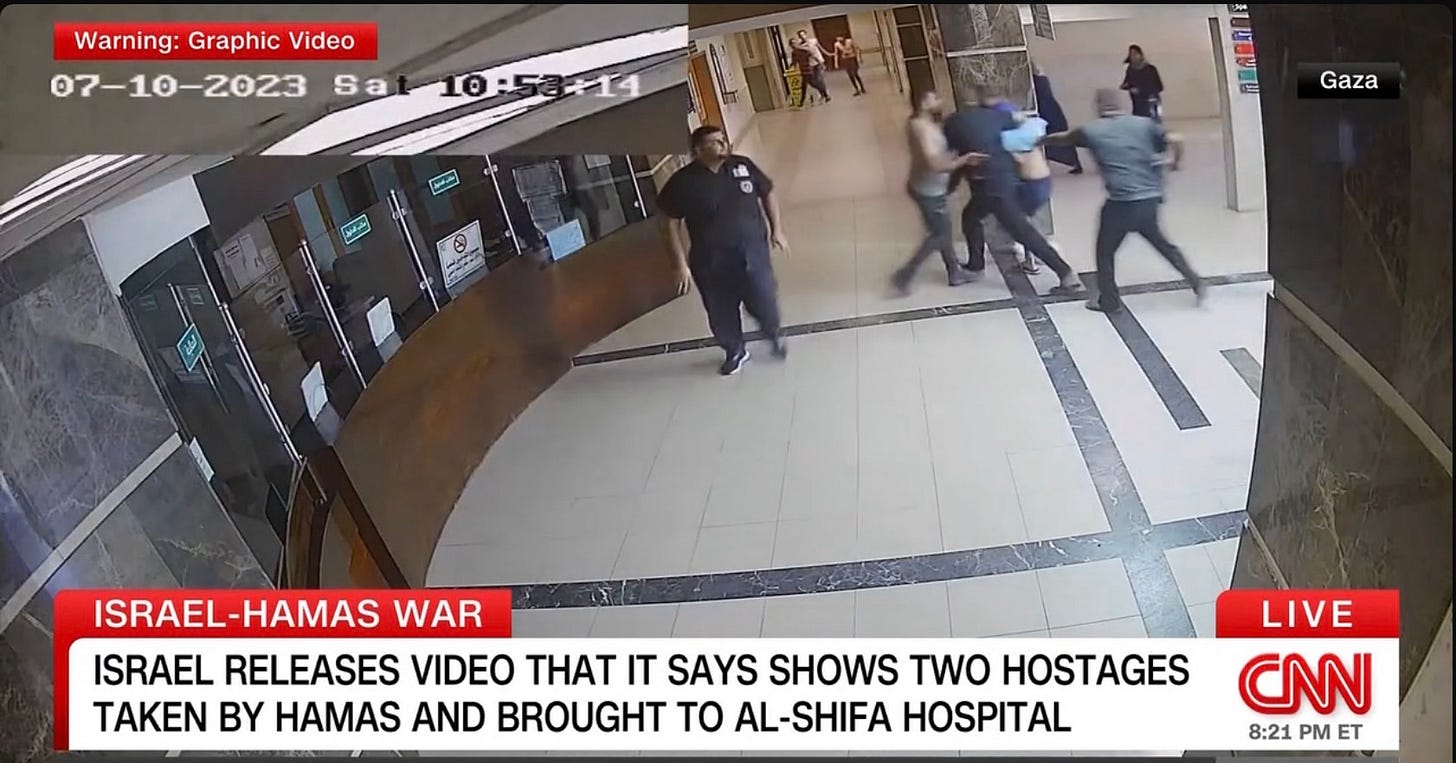
Some of the most glaring examples include video footage of hostages being dragged through Al Shifa hospital on 7 and 8 October and former hostage Sharon Cunio describing to CNN’s Anderson Cooper how she and other hostages were held in Nasser hospital and transported in ambulances.
Since the Israel-Hamas ceasefire on October 10 2025, WHO has registered 27 attacks on health facilities in the ‘occupied Palestinian territory’ through its Surveillance System for Attacks on Health Care. Only 1 of these involved a report on the militarization of health care – even though there is evidence that Hamas militarization of healthcare continues until today.
Such selective attention goes back a long way. After the 1967 war WHO member states adopted a resolution to report annually on health conditions in the ‘occupied Palestinian territory and East Jerusalem.’ In practice this means a selective focus on Israel.
It is also not unique to WHO. I scanned press releases of human rights NGOs since the October 10 2025, ceasefire for mentions of Hamas or the Iranian regime in hospitals. Human Rights Watch had one mention (in more than 500 releases) of Iranian regime raids on hospitals. Amnesty International had one mention (in more than 200 releases) of Iranian regime arrests and denial of medical treatment in hospitals.
Militarizing hospitals
The selective approach often downplays the use of health facilities for military purposes. Militarizing hospitals puts patients and staff at risk. Militarized hospitals can lose their protection under international law, although a number of safeguards remain, such as warnings, precautions, and proportionality. In a sense, militarization is the ‘Achilles heel’ of protection — and deserves special attention.
What is interesting about militarization is this: at its core it’s an epistemological problem. You don’t find if you don’t look. What we have here is a humanitarian version of the oft quoted saying, ‘if a tree falls in the forest and there is no one around to hear it does it make a sound?’
In November 2025, after the October 10 ceasefire, Ahmed Fouad Alkhatib, a Gaza native and commentator who now lives in the US, posted, “Gaza’s torture dungeons are now in hospitals.” He went on to describe how Hamas ‘viciously’ interrogated his friend in the al-Nasser hospital in Khan Younis.
Médicins sans Frontieres (MSF) corroborated Hamas misuse of hospitals in a statement it issued about Nasser hospital in February 2026: “With an uptick since the ceasefire, MSF teams have reported a pattern of unacceptable acts, including the presence of armed men, intimidation, arbitrary arrests of patients, and a recent situation of suspicion of movement of weapons. These incidents pose serious security threats to our teams and patients.”
For some, this was reminiscent of the scene in Casablanca where the police chief says, “I am shocked, shocked to find there is gambling going on in here.” Or, as Alkhatib observed in an X post entitled “The Great Hospital Con”: “MSF is two years late to this recognition but it is ultimately confirming what even a child in southern Gaza could have told the organization or the NYT, Washington Post, BBC, Al Jazeera and countless others had they bothered to ask - which is that Hamas has literally turned Gaza’s three main hospitals into headquarters for security, ministerial, and administrative operations.”
Admittedly, Hamas in Gaza or the regime in Iran would not be rushing to report their own militarization of health facilities and would not take kindly to others doing so.
Impartiality
Selective attention calls into question the impartiality of humanitarian organizations and the objectivity of their reporting. It foments outrage against the US and Israel while shielding the cruel Iranian regime and Hamas terrorist group.
The fundamental problem is that selective attention undermines the very norm it is meant to uphold. Norms require us to regard transgressions as taboo. If some are ignored, the norm is eroded.
There are simple things humanitarian organizations could do. The March 5th press conference featured the regional director of EMRO (the WHO region in which Iran sits) but not the regional director of EURO (the WHO region in which Israel sits). Subsequent WHO situation reports have been issued by EMRO but not by EURO, thereby omitting Israel. This imbalance should be easy to correct.
Recommendations for improving data and transparency of the surveillance system have been put forward but not yet implemented. WHO could strike an independent expert panel to examine and improve the surveillance database, with a focus on impartiality, as I argued a year ago in the New York Times.
Dialogue with critical civil society organizations such as UN Watch or NGO Monitor could also help.
There are also lessons to be learned from other contexts — such as from the Dinah project about reporting the sexual violence of October 7th or institutional neutrality policies in US universities. Humanitarian organizations could take a page from the social auditing movement and set up an independent group to audit their activities for impartiality — although their boards would have to embrace this value.
Without humanitarian organizations re-committing to impartiality and taking more seriously the militarization playbook, the norm against attacks on health facilities will continue to erode and suffering will increase.
Thanks for reading Global Health Insights! Subscribe for free to receive new posts.

 reposted


 Parents advocate for religious rights outside the Supreme Court during arguments in Mahmoud v. Taylor in 2025. (Photo by Anna Moneymaker/Getty Images)

 ELuttwak