Strategic Initiatives
12364 stories
·
45 followers

Opinion | Chinese restrictions on outbound investment expose weakness - The Washington Post

1 Share

LLM (google/gemini-3.1-flash-lite-20260507) summary:

  • Capital Flight Panic: authorities are scrambling to contain a massive one trillion dollar outflow of personal wealth.
  • Restrictive Measures: new regulations are being forced onto overseas investments including foreign stocks real estate and insurance.
  • Economic Skepticism: residents are actively avoiding the domestic market due to mounting debt and a deteriorating housing sector.
  • Technological Protectionism: the government is aggressively restricting the movement of engineers and proprietary data to foreign companies.
  • Forced Divestment: recent orders have coerced the unwinding of international acquisitions like the meta deal for manus.
  • Autocratic Consolidation: state leaders are attempting to hoard capital and talent within borders through total central control.
  • Stifled Innovation: blocking access to global financial networks and venture capital threatens to destroy the domestic technology sector.
  • Inevitability Of Evasion: aggressive mandates will likely lead to desperate attempts by citizens to bypass state systems to preserve their savings.

China’s Communist rulers panicked about capital flight after a record $1 trillion flowed out of the country last year. Rather than dealing with the dynamics driving away wealth, Xi Jinping’s totalitarian regime is imposing stringent new controls on buying stocks, real estate and insurance policies overseas.

These investments have grown in popularity because people with savings prefer alternatives to China’s slowing economy, shaky housing market and accumulating local government debt.

The basket of regulations unveiled this month also imposes additional restrictions on Chinese engineers working abroad and bans unauthorized transfers of data, technology, goods or services to foreign companies.

That follows Beijing’s order for Meta, the owner of Facebook, to unwind its $2.5 billion purchase of the artificial intelligence start-up Manus. After originating in China, Manus transferred operations and staff to Singapore ahead of being acquired. China wants to prevent other companies from making similar moves.

The Communist Party wants to keep as much money, technology and talent as possible locked inside its borders. In addition to erecting a fire wall against America in the AI race, the goal is to boost domestic consumption. But the policy exposes fundamental weakness in their system and risks deepening Beijing’s global isolation.

It will also intensify the ire of citizens who cannot fully benefit from today’s technological gold rush.

This is what insecure leaders do in autocratic systems. Their impulse is to exert more control over every aspect of life: what to read, where to travel, the size of families and so on.

The Chinese people are inveterate savers. The average household saves around one-third of its disposable income, compared with under 4 percent among Americans, and they’re looking for somewhere productive to park that money. Overseas insurance policies have become so popular on the mainland that selling them is a coveted first job for graduates from prestigious Chinese and Hong Kong universities.

After the new limits take effect on July 1, enterprising Chinese nationals will seek more surreptitious ways to get their money out of the country. These may not generate the same returns on investment. The biggest losers will be Chinese entrepreneurs.

Tech start-ups look overseas for seed money. By cutting off access to outside capital and global financial networks, the government risks stifling the innovation it is so desperate to encourage. Economies flourish when money and talent are allowed to gravitate toward the best ideas.

Read the whole story
bogorad
1 hour ago
reply
Barcelona, Catalonia, Spain
Share this story
Delete

Anthropic’s Political Risks Are Real, but OpenAI’s Loom Even Larger - WSJ

1 Share

LLM (google/gemini-3.1-flash-lite-20260507) summary:

  • Legal Standoff: anthropic continues to struggle through litigation after being designated a security risk for denying military access to its software.
  • Financial Insulation: the firm faces minimal long term fiscal exposure due to defense contracts being a negligible portion of its overall revenue stream.
  • Brand Narrative: public relations posturing frames the refusal to support automated warfare and surveillance as a sophisticated moral stance to attract corporate clients.
  • Market Reaction: minor shifts in user adoption trends illustrate a temporary uptick in software installations despite the ongoing regulatory pressure.
  • Regulatory Friction: government attempts to restrict export access to advanced models proved short lived as the company quickly smoothed over cybersecurity compliance issues.
  • Competitive Contrast: peer entities like openai face far greater existential threats due to their wider mass market reach and complex congressional scrutiny.
  • Ownership Schemes: proposed solutions regarding state equity stakes or public investment vehicles highlight the inevitable desperation of these corporate entities seeking political shelter.
  • Market Speculation: the looming pursuit of ipo status drives a frantic need for both firms to navigate treacherous geopolitical waters while maintaining thin margins of legitimacy.

July 8, 2026 5:30 am ET

Dario Amodei speaking at Journal House WEF 2026.Under Dario Amodei, Anthropic has filed lawsuits against the Defense Department. Maurizio Martorana For WSJ

Anthropic has been in the political crosshairs lately. But the business consequences aren’t as dire as they might seem. And among its AI rivals, there will be plenty of political risk to go around.

The AI-model developer is embroiled in a legal fight with the Trump administration, which deemed it a security risk earlier this year after the company declined to give the Defense Department unfettered access to its tools. That battle escalated last month with a government move that forced Anthropic to cut off access to its most-advanced models.

Serious though they might appear, those political challenges likely won’t be lasting. They might even prove to be much less thorny in the long term than those of its rival, OpenAI, as both companies gear up for IPOs.

Much of the concern that has led to curbs on Anthropic merely reflects how slow the political sphere has been to adapt to the rapid advance of artificial intelligence. There aren’t many laws in place that regulate AI, leaving the government to scramble for responses when perceived threats emerge.

Some of those responses have been ham-handed. When the Defense Department designated Anthropic a supply-chain risk, the administration relied on statutes intended to prevent foreign adversaries from involvement in U.S. defense procurement.

Anthropic, which is helmed by Chief Executive Officer Dario Amodei, filed two lawsuits to block the designation, and it looks so far as though the government is likely to prevail in at least one of them, allowing it to continue excluding Anthropic from defense contracts.

That will certainly limit the market for Anthropic’s products. But the company’s exclusion from defense deals won’t take a huge financial toll. Defense, after all, is hardly the company’s bread and butter.

The bigger danger for the company is the reputational hit that could come with being seen as a security risk. That could theoretically scare away corporate customers that supply around 80% of its revenue.

Viewed in another way, though, the dustup could work to Anthropic’s reputational advantage.

The company’s beef with the Defense Department has been over its refusal to allow its models’ use in fully autonomous weapons and for mass surveillance. Even as ethical concerns are set aside, it might be more dangerous for Anthropic’s reputation among corporate customers to be associated with botched military operations and spying on ordinary people than being branded a risk by the Pentagon.

App download patterns give some support to the notion that users support Anthropic’s position. Uninstalls of OpenAI’s ChatGPT surged early this year following news that the company was negotiating its own deal with the Pentagon, according to the data provider Sensor Tower, even though OpenAI has said it places limits on how the military can use its technology. Moreover, more users installed Anthropic’s Claude than ChatGPT in the days after the Pentagon deemed Anthropic a security risk—a reversal of ChatGPT’s usual lead.

The Defense Department has plenty of reasons to mend fences with Anthropic. Anthropic has made it clear that it won’t relent on limits on its models’ use. That leaves the Pentagon with two options: find a way forward with Anthropic, or simply don’t use its tools. The latter option would deprive the department of some of the most cutting-edge AI models in the world. At some stage—possibly when political winds change—a resolution seems likely.

The Trump administration’s other crackdown on Anthropic also has been short-lived. The administration used the Commerce Department’s export-control authority to ban foreigners, including Anthropic’s own employees, from using its technology last month. That led Anthropic to cut off all access to its most-advanced Fable 5 and Mythos 5 models.

The temperature there has already cooled. The administration first allowed Anthropic to give access to a select group of trusted customers before giving it the go-ahead for wider access late last month after it addressed cybersecurity concerns.

That episode was more a testament to the Anthropic’s models’ abilities than any flaw that could put it in lasting political jeopardy. As BMO Capital Markets analyst Brian Pitz recently said in a note, the restriction “underscores the power of Anthropic’s models and their current leadership position.”

Also working in Anthropic’s favor is that its risks in the longer term look less acute than its nearest competitor’s.

OpenAI which, like Anthropic, is pursuing an IPO that could value it above $1 trillion, is more of a mass-market pIayer. While Anthropic gets almost all of its revenue from corporate customers and is the market-share leader in that area, OpenAI caters to a larger swath of users. OpenAI’s ChatGPT shot to more than a billion monthly active users in May, according to Sensor Tower, well above any other competitor and multiples of Anthropic’s user base.

But OpenAI’s wide reach is a political liability as much as a commercial asset. It exposes OpenAI to the kind of social-impact scrutiny that has dogged Meta Platforms and other social-media companies for many years. CEO Sam Altman has already testified before Congress about the risks AI poses. He is sure to be back.

Altman has repeatedly proposed that the government take an equity stake in his company and his competitors. If the U.S. owns part of OpenAI but others don’t bite, it could mean some political favor for the company. But it would also make OpenAI subject to political control that could hurt its competitive position. Rather than suggesting a straight government stake, Anthropic recently proposed investment accounts for Americans most affected by AI job losses. The accounts would hold shares of AI companies.

Any form of public-sector ownership of the companies would be a minefield and is just one of many political risks they will have to contend with in the years ahead. But fundamental differences between their two business models mean that political questions could loom larger over OpenAI in the long run, even if Anthropic is under a brighter spotlight now.

Copyright ©2026 Dow Jones & Company, Inc. All Rights Reserved. 87990cbe856818d5eddac44c7b1cdeb8

Appeared in the July 9, 2026, print edition as 'OpenAI’s Political Risks Top Anthropic’s'.

Asa Fitch is a writer covering technology for The Wall Street Journal’s Heard on the Street column, based in New York. He also co-writes the Journal's weekly AI & Business newsletter. Asa previously reported on semiconductor companies from the Journal’s San Francisco and New York bureaus, where he covered Nvidia’s rise amid the AI boom and Intel’s struggles to turn itself around.

Prior to that, Asa spent a decade as a foreign correspondent in the Middle East. He joined the Journal in Dubai, where he initially covered business and finance before shifting to covering regional politics and conflicts. He covered the Gaza War in 2014, the military campaign against Islamic State in Iraq, the Yemeni civil war, and Iranian elections and politics, including the country’s nuclear deal in 2015.

Asa began his career as a general-news reporter in Connecticut and a personal finance reporter in New York. He is a graduate of Carleton College and Columbia University's journalism school.


Up Next


Videos

Read the whole story
bogorad
1 hour ago
reply
Barcelona, Catalonia, Spain
Share this story
Delete

I Watched the DSA Go Crazy. The Democrats May Be Next.

1 Share

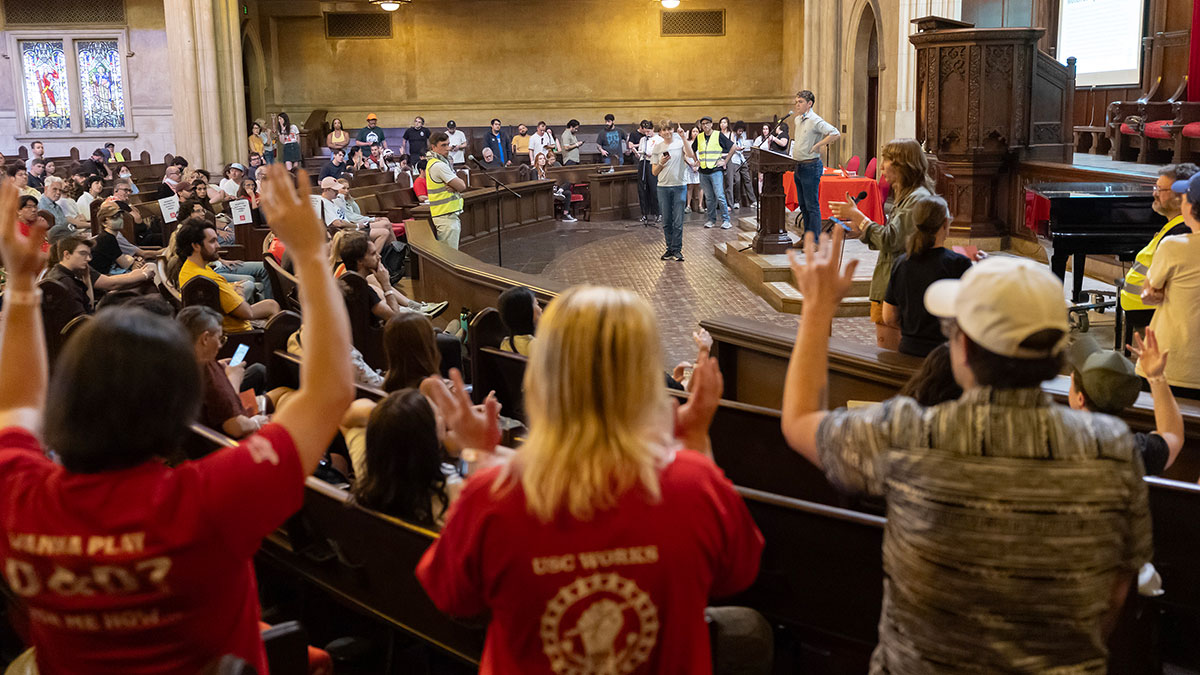
How worried should Democrats be about the Democratic Socialists of America? In the wake of a series of DSA victories in New York City, Jonathan Chait raised the alarm in The Atlantic, writing that as the group has risen in power, it has also grown “more hostile to the [Democratic] party, more illiberal, and more dogmatic.” Long-time DSA members, including former staff member and thought leader David Duhalde and socialist magazine publisher Nathan J. Robinson, pushed back, dismissing Chait as someone who doesn’t know or understand the DSA.

Well, I know the DSA, and as someone who was a member and served in local leadership, I can say that Chait has it right: today’s DSA is not a harmless organization. It includes disciplined, radicalized networks that have methodically expanded their power over the last decade in pursuit of extremist goals.

As the Democratic Party grapples with the DSA’s growing influence and extremism, it would do well to recognize that the same dynamic underway now—first accommodation, then capture, then surrender to insurgent radicals—already played out on a smaller scale within the DSA itself. The only defense is to out-organize it.

For decades, the DSA was mostly composed of a cohort of aging Boomers left over from its founding in 1982. It prioritized open debate and political tolerance. Following in the tradition of founder Michael Harrington, members viewed the DSA not as a revolutionary vanguard but as a reformist bridge to mainstream labor-liberalism, and they prioritized parliamentary process and pluralism.

But in the mid-2010s, the character of the organization began to change. I was in Boston at the time and witnessed the last days of the “old” DSA. New, younger members began to enter the organization, while Senator Bernie Sanders and the socialist magazine Jacobin grew their followings.

As the DSA’s cultural power expanded and it began to amass electoral victories, more leftists of varying extremist commitments were drawn in. This was an explicit strategy called “the big tent,” advanced by the then-DSA Jacobin Left. In August 2025, DSA delegates voted to remove a constitutional provision barring Leninists from entry. The provision was already a dead letter.

The old DSA’s high-mindedness became its fatal weakness. Veteran members assumed the younger generation played by the same rules of persuasion, but the newcomers’ goal was not to win arguments—it was to transform the institution and its politics.

As the organization grew, it began to profess more extreme ideas—and demand that its members do the same. First there were the purity tests of Black Lives Matter and BDS, then apologia for Putin’s invasion of Ukraine and support for Hamas and its atrocities.

The new DSA—with the help of hype-man Hasan Piker—advanced these agendas with what American labor leader Walter Reuther called “the Communists’ highly developed technique of name-calling and character assassination.” The Harringtonites fought back, but their efforts came far too late, and many prominent members of the older generation eventually left.

My final attempt to challenge Leninist-Third Worldist dominance within the DSA fell apart amid stiff resistance. In April 2025, I proposed that North Star, a caucus including many Harringtonite veterans, call on the DSA’s governing board to demand that Hamas release all hostages in Israel and surrender unconditionally.

Even allies were dismissive of my proposal’s prospects. One member wrote, “Jake’s resolution could not pass. If it passed, we would close our doors the next day and deserve it. We would not deserve to be in DSA, which is perhaps his purpose.”   

Long-time DSA insiders like Duhalde, who has advocated for the “big tent” that brought in Communists, do not dispute that this radicalization process occurred. But Duhalde maintains that this was less about “entryism” than an “unplanned left-wing refoundation.” That formulation glosses over the systematic displacement of the organization’s foundational commitments and rejects the warnings of many in DSA’s founding generation.

In fact, the organization continues to eat its own. The former radical vanguard clustered around Jacobin has been eclipsed by a coalition of Third Worldists, Trotskyists, and doctrinaire Leninists, some of whom openly endorse political violence. At the same time, condescension and outright hostility toward anti-Communism remain. One long-time DSA thought leader dismisses the anti-Communist tradition on the Left as “neoconservatism with a union label.”

There are warning signs that the Democratic Party establishment is drifting toward a similar surrender. It is already teetering on the edge of accommodation—or worse, capture—rather than opposition.

What happened to the DSA can and will happen to the Democratic Party if more moderate Democrats don’t organize against it. As Reuther, a man with experience fighting Leninists, wrote in 1948: “You have to show [Communism] up in the marketplace of ideas, expose it by honest dealing.”

But the battle is not merely ideological. Reuther’s victory over the Communists in the United Auto Workers union was the result of a clear-eyed strategy of exposing, isolating, and driving out those who rejected democratic norms. He also built a broad anti-Communist coalition. Dissident Democrats would do well to take inspiration from him.

Donate

City Journal is a publication of the Manhattan Institute for Policy Research (MI), a leading free-market think tank. Are you interested in supporting the magazine? As a 501(c)(3) nonprofit, donations in support of MI and City Journal are fully tax-deductible as provided by law (EIN #13-2912529).


Read the whole story
bogorad
19 hours ago
reply
Barcelona, Catalonia, Spain
Share this story
Delete

What Farage can learn from Trump | The Spectator

1 Share

LLM (google/gemini-3.1-flash-lite-20260507) summary:

  • Establishment Conspiracy: claims of a coordinated bureaucratic effort to derail populist figures through aggressive legal and political maneuvering.
  • Failed Strategy: assertions that the repeated usage of high-profile legal challenges against political outsiders often results in diminished public concern.
  • Trump Precedent: the observation that relentless legal attacks intended to disqualify an opponent ultimately failed to prevent his electoral return.
  • French Judicial Theatre: description of attempts to sideline political opposition through controversial legal convictions that appear transparently partisan.
  • Reform Party Fragility: anxieties surrounding questionable financial contributions which invite intense scrutiny from opponents and media critics.
  • Strategic Miscalculation: skeptical evaluation of a sudden resignation and by-election bid as a potentially futile and tiresome political maneuver.
  • Unorthodox Persona: insistence that a disregard for conventional standards of political conduct acts as a permanent shield against standard accountability.
  • Backfire Potential: the cynical conclusion that campaigns designed to ruin specific reputations frequently function as publicity tools that bolster voter loyalty.

In January this year Dominic Cummings – once of this parish – warned The Spectator’s editor and assistant editor that Whitehall and the establishment parties would “stop at nothing” to prevent Nigel Farage from becoming prime minister. As Cummings told the Quite right! podcast: “The people around [Keir] Starmer and all through the upper echelons of the Whitehall system are looking at Donald Trump. They’re looking across Europe, and they’re saying to themselves: ‘The lesson is to strike early and strike hard and not let these people in… Let’s smash the absolute living shit out of Farage, and make sure that he doesn’t win, by fair means or foul.'”

Cummings may be right about that, but the two most obvious comparisons with the recent hosing of Farage demonstrate how this maneuver can just as easily backfire.

Farage is, like Trump, too different from other politicians to be brought down by the usual rules

The “anti-Trump playbook” – as Trump himself has referred to the treatment of Farage – quite obviously did not work with Trump. Nevertheless, there was a period in around 2023 when it looked as if it could do so. Mar-a-Lago had already been raided by the FBI, looking for classified documents that it turned out almost every former official had lying around. And it was the year in which Trump was dragged to court in New York to face 34 felony counts relating to alleged hush-money payments and the falsifying of business records. Then in January 2024 a civil court ordered Trump to pay almost $90 million to a woman who had accused him of assaulting her in the changing rooms of a Manhattan department store three decades earlier.

To many observers it seemed that if only one of these cases had been pursued then the people most eager to keep Trump out of running in the 2024 election might have got their way. But the “get-Trump” movement over-egged it. So relentless were the accusations against him – and so patently absurd in some cases – that all but the most Trump-obsessed voters zoned out. Trump’s opponents threw everything they had at him in the hope that something would stick, only to discover that they had thrown so much at him that nothing stuck. Certainly not in the minds of the voting public who returned him to office the following year in both houses and the popular vote. The other example of something similar is happening in France where the leader of the National Rally, Marine Le Pen, just had her conviction for embezzlement upheld by a Paris court. The accusation against Le Pen was that her party had used millions of euros of EU funds to pay aides who used their time working in French national politics instead of European parliamentary matters. A thing that no other party in the EU parliament has ever done, obviously.

The French courts originally sentenced Le Pen to a four-year prison term and a five-year ban on running for political office. But in France – as in America – the case seems not to have landed with the public. The whole process looks too much like a concerted attempt to stop at nothing in order to prevent Le Pen from being able to run in France’s 2027 presidential election. Despite an appeals court upholding the conviction this week, it now looks as if Le Pen will be allowed to run in the next election, though for a year she will have to do so wearing an ankle monitor.

Which brings us back to Farage. In recent weeks the Reform party leader has looked vulnerable over his acceptance of a £5 million gift from a Thai-based crypto billionaire called Christopher Harborne. Now he is also getting criticism for accepting gifts from a roguish character in his inner circle known as “Posh George” (aka George Cottrell). Farage has responded to this with the uncommon move of resigning his parliamentary seat and vowing to run in a by-election in Clacton in which he promises to give the voters the say on whether or not they think these allegations should matter.

It doesn’t seem the wisest of moves to me. Voters tend not to like endlessly having to return to the polls. And the only precedent I can think of for Farage’s move was that odd moment in 2008 when David Davis stepped down and then stood in a fresh by-election over the issue of how long terrorist suspects could be detained without charge. My memory of that affair was that nobody could quite work out why Davis needed to resign and then fight and win a by-election in the same seat over an issue which he failed to bring any particularly fresh attention to. If he thought the stunt would advance his standing in the Conservative party, then the years since speak for themselves: to date David Davis is just about the only MP of his generation not to lead the Conservative party.

Farage is a different case. Anyone who thinks he might be intimidated into stepping down should remember that this is a man who led the UK Independence party in 2009. A party which, in the wake of the Westminster MPs expenses scandal, saw nothing odd about campaigning in the subsequent elections by knocking on prospective voters’ doors while wearing great big pound signs.

‘I don’t understand why he’s so popular…’

Personally I am not sure that any of the charges being made against Farage are going to stick. He is, like Trump, too different from other politicians to be brought down by the usual rules. It is true that he has needed personal security for many years, and it is obvious that the ways in which these and other expenses will have been paid for may be unorthodox. But the whole point of Farage is to be unorthodox. And, as with Trump, statements or scandals that would bring down any other politician fail to bring him down.

Nevertheless, it’s a fine balance. And a reminder of how much hangs on the often marginal judgment calls that people make. The people who are out to get Farage are presumably hoping to break him. If events across the Atlantic are anything to go by, they could just as easily be the making of him.

Read the whole story
bogorad
19 hours ago
reply
Barcelona, Catalonia, Spain
Share this story
Delete

AI Giants Are Handing Out Tons of Free Computing Power to Grab Startup Share - WSJ

2 Shares

LLM (google/gemini-3.1-flash-lite-20260507) summary:

  • Market Competition: leading artificial intelligence companies are aggressively providing financial incentives to capture new enterprise clients.
  • Startup Benefits: founders receive substantial computing credits and token subsidies that reduce reliance on external capital funding rounds.
  • Strategic Pricing: major providers utilize volume discounts and special access to engineers as instruments to secure long term market integration.
  • Cloud Subsidies: large technology firms including google microsoft and amazon provide significant cloud infrastructure credits to assist startup growth.
  • Competitive Landscape: intense pressure to increase margins ahead of anticipated public offerings drives these firms to fight for startup partnerships.
  • Accelerator Focus: major ai providers target y combinator cohorts with multi million dollar credit offers sometimes in exchange for equity.
  • Volume Incentives: current rate structures allow high usage of expensive token models at a fraction of their standard market price through subsidies.
  • Industry Lock In: model developers offer free infrastructure access to prevent startups from migrating to cheaper international or open weight alternatives.

Investors and startup founders mingling outdoors at Y Combinator Demo Day.Investors mingling with startup founders at Y Combinator Demo Day in San Francisco in March. Poppy Lynch for WSJ

Hans Ibarra, a founder building an AI-voice startup, has found himself on the receiving end of a big opportunity: Top artificial-intelligence companies such as OpenAI, Anthropic and others desperate to win his business are ramping up discounts.

Across Silicon Valley, startup founders like Ibarra are enjoying a wave of computing credits and fielding competing offers from AI-model makers racing to land new enterprise customers. Cursor, the AI-coding company bought by Elon Musk’s SpaceX, offered a 75% discount through July 5.

The offers from growing AI-sales armies at companies such as OpenAI and Anthropic are so rich that some early-stage startup founders say they won’t need to raise money as soon as they expected, and others have been able to play AI companies off one another. Startups have received offers that in some cases amounted to more than $3 million in credits from multiple companies for cloud computing and tokens, the central units used to measure and charge for AI usage, founders say. That is the size of the median U.S. seed round, according to PitchBook.

Alphabet’s GOOGL 1.82%increase; up pointing triangle Google Cloud is giving some startups up to $500,000 in cloud credits and early access to Gemini models. It also occasionally offers special access to DeepMind engineers, a Google spokesman said. Microsoft and Amazon Web Services also offer startups special perks.

The pitched battle for business users comes as AI companies seek lasting streams of revenue. They hope that by winning startups as customers early in the life of new companies, their tools will become integral to the venture’s growth over time.  

OpenAI and Anthropic are offering a string of promotions and one-time bonuses, even as both companies face enormous pressure to improve their margins ahead of expected initial public offerings. They also face competition from increasingly powerful “open weight,” or free models, as well as cheaper ones, many of which were developed in China.

The token deals available to founders “directly correlate to the scale you can grow your product,” said Ibarra, co-founder of Dialogus. “If you’re not getting this deal, you will need to raise money to buy those.”

Anthropic’s revenue skyrocketed late last year as millions of new users tapped their Claude Code and Cowork software to autonomously complete a range of tasks. Claude’s viral popularity helped launch the “agentic” AI era, in which top AI companies are increasingly focused on building tools that customers can use to complete long-running knowledge-work tasks, such as coding and deep research.

For months, OpenAI struggled to match the strength of Anthropic’s coding-focused models and products, giving its younger rival the advantage in the lucrative enterprise market. Companies initially nudged employees to use AI more in their work, but soon some saw the bills as prohibitively high.

OpenAI’s fortunes began to change after the March release of a new model, called GPT-5.4, that matched many of Anthropic’s capabilities. The company has since deployed its salespeople to sell its Codex tool, which is powered by its GPT model, to startups across Silicon Valley, oftentimes offering volume discounts and other sweeteners to win new customers.

Semianalysis, an AI-infrastructure data and consulting firm, recently published research showing how heavily the companies are subsidizing power users.

Subscribers to Anthropic’s Claude Max plan, which costs $200 a month, are able to burn tokens worth $8,000 in their usage-based plans administered through an application programming interface, or API, which allows them to integrate Anthropic’s technology into their products. Maximum use of OpenAI’s ChatGPT Pro 20x plan, which also costs $200 a month, can burn tokens worth $14,000.

In their quest to secure new business customers, Anthropic and OpenAI have zeroed in on startups participating in Y Combinator, the Silicon Valley institution that launched Airbnb and Stripe. In May, Sam Altman announced that OpenAI would give $2 million in token credits to every startup participating in the accelerator program in exchange for equity in those companies.

YC startup founders sit in an auditorium during Demo Day.Y Combinator runs four cohorts a year. Poppy Lynch for WSJ

Around the same time, Anthropic began offering Y Combinator startups $500,000 in free credits, a sharp increase from the $30,000 it previously offered, an Anthropic spokeswoman said. Anthropic’s offer doesn’t require startups to give up equity.

Soon afterward, in recent weeks, OpenAI adjusted its deal, offering startups $500,000 in free credits—no equity required—with an optional additional $1.5 million in credits in exchange for equity, according to people familiar with the matter.

The back-and-forth reflects the intense battle the companies are in to sway young startups that could become large customers in the future. Model providers hope that by offering these companies discounts, they can lock them into their ecosystem. 

At an event hosted to kick off the summer season of Y Combinator’s program, representatives from OpenAI and Anthropic, among others, met with startup founders and offered advice about making the most of their token usage, including by embracing loop engineering, or teaching AI agents to repeat a task until they have achieved their assigned goal.

Touchmark, an AI startup that was accepted by Y Combinator in May, was immediately granted $1 million in token credits from OpenAI and Anthropic before the accelerator even kicked off its summer session.  

For Ilia Bolgov, co-founder of Touchmark, the credits meant “quite a lot of time to go all-in on tokenmaxxing,” a term for using as many tokens as possible, he said. “It’s hard to imagine productivity now without these deals.”

The credits represent a massive potential investment on behalf of the model providers. Y Combinator runs four cohorts a year, with recent cohorts enrolling about 200 companies each, meaning OpenAI and Anthropic could offer up to $800 million in combined AI credits in the next year.

“The world of AI is being powered by OpenAI and Anthropic because they are giving startups the money to pay for it,” said Christopher Acker, co-founder of SuperPenguin, a firm that helps companies track their AI spending.

“If I’m choosing between a really cheap Chinese model that I actually have to pay for, and a very expensive Anthropic model that I don’t have to pay for, I’m going to pick the Anthropic model,” Acker said. “I’m always going to pick the one for which I have free credits.”

Copyright ©2026 Dow Jones & Company, Inc. All Rights Reserved. 87990cbe856818d5eddac44c7b1cdeb8

Angel Au-Yeung is a finance and technology reporter for The Wall Street Journal in San Francisco. She covers business leaders, startups and Silicon Valley culture. She has won several national awards for her work, including investigations into a Russian billionaire's ownership of dating app Bumble, the final months of the late former CEO of Zappos Tony Hsieh and the downfall of crypto-trading firm FTX.

She is the co-author of "Wonder Boy: Tony Hsieh, Zappos and the Myth of Happiness in Silicon Valley," which was named one of the best business books of 2023 by the Financial Times and described by the New Yorker as "mandatory reading for anyone who is interested in big tech."

Berber Jin covers startups and venture capital out of the Wall Street Journal's San Francisco office. His articles focus on the money and people powering Silicon Valley, with a recent focus on artificial intelligence. He previously covered the same topic for the Information, where he won a Best in Business award from the Society for Advancing Business Editing and Writing.

Berber is originally from Scarsdale, N.Y., and graduated from Stanford University.

Kate Clark covers startups, venture capital and artificial intelligence for The Wall Street Journal and is based in New York. Her reporting examines venture investment, private market dealmaking and the power dynamics between founders and investors in Silicon Valley and beyond. Previously, Kate was a senior reporter at Bloomberg News and a deputy bureau chief at The Information, where she led coverage of the venture capital and startup industry. She began her journalism career at TechCrunch and has won multiple Best in Business awards from the Society for Advancing Business Editing and Writing, including for breaking news coverage of OpenAI and for technology and markets reporting.

A Seattle native, she earned her degree from the University of Washington.


Up Next


Videos

Read the whole story
cherjr
14 hours ago
reply
48.840867,2.324885
bogorad
3 days ago
reply
Barcelona, Catalonia, Spain
Share this story
Delete

Wealthy Families Swap Traditional Classrooms for AI Tutors and ‘Alternative’ Schools - WSJ

1 Share

LLM (google/gemini-3.1-flash-lite-20260507) summary:

  • Educational Innovation: affluent families explore private schooling models emphasizing life skills and real world problem solving over traditional academic fact recitation
  • Technology Integration: schools increasingly utilize artificial intelligence based tutoring platforms to create personalized learning paths for individual students
  • Entrepreneurial Focus: institutions like forge prep prioritize business building product design and practical skill development to prepare students for future economic shifts
  • Operational Autonomy: these private entities function outside of state reporting requirements making comparative effectiveness difficult to track
  • Professional Nomenclature: staff members in these non traditional environments are referred to as guides or coaches rather than teachers
  • Industry Expansion: companies like alpha school are scaling operations rapidly with new physical locations and direct to consumer at home software products
  • Academic Skepticism: experts from established educational institutions express concern regarding the lack of empirical evidence supporting these new hybrid delivery models
  • Social Homogeneity: critics observe that the niche focus on high tech venture and entrepreneurial skills may contribute to limited diversity within student populations

July 3, 2026 9:00 pm ET

Two students reading books in hexagon-shaped cubbies.Alpha students in Austin, Texas. Alpha School

There was nothing wrong with the Madison, N.J., public school Ankur Jain’s 11-year-old son attended: Arjan was happy and excelling academically. But Jain was intrigued by Forge Prep, a new school for fifth through eighth-graders in nearby Livingston that promised learning through real-world problem-solving, building businesses and designing products.

This appealed to Jain’s entrepreneurial side. His son could learn negotiation, sales and public speaking—tools he didn’t fully develop until his 20s. 

“The future is changing,” says Jain, the president of a hedge fund. “If we’re still teaching the kids the way we used to 60, 70, 80 years ago, how are we preparing them?”

Alternative schooling is having a moment among high-income parents. Families who can afford to send their kids to the best K-8 institutions are seeking new options. They’re exploring schools that prioritize life skills and call teachers “guides” or “coaches.” Some use AI-based tutors that tailor the curriculum to the child’s individual needs.

Parents considering less traditional options say AI is poised to have significant effects on the economy, so old ways of learning may no longer make sense. (Forge Prep’s marketing materials refer to it as “built for 2040. Not 1940.”) They also say AI tutors and hands-on learning in smaller groups offer opportunities for a more individualized curriculum.

Unlike public schools, these institutions aren’t required to report metrics to the state and their relative effectiveness can be difficult to evaluate. 

The Badger Den under renovation, with exposed metal studs, a wooden arched ceiling, and large windows.The Forge Prep campus is undergoing renovation at the site of a former Catholic school in Livingston, N.J. Forge Prep

Alpha School, which focuses on K-8, though some locations go through high school, has garnered the most attention in recent years. It started in Austin, Texas, 12 years ago and added eight schools around the country in 2025, San Francisco and New York among them. This fall, nearly two dozen more are set to open, including in Palo Alto, the East Bay and Malibu, Calif. Alpha also sells home-schooling software and its skills-based curriculum.

Shaun Johnson, a venture capitalist who lives in San Francisco, plans to send his son to Alpha kindergarten. The school provides two hours of AI-based tutoring followed by interactive project-based workshops. The local tuition is $75,000 a year.

Johnson made the decision after being unhappy with the public school his family got in the local lottery. He didn’t strongly consider local standard private-school options.

“We recognize that education is likely broken the way it is and there’s going to be entrepreneurs that try to fix it,” he says. “You want someone to be able to think on their feet and navigate the world, not necessarily a recitation of facts in a particular discipline.”

Alpha’s main draw, Johnson says, is a more personalized way for his son to learn. The AI platform records students’ interactions, including how well they are paying attention. A child’s performance influences the curriculum for the coming days and weeks in what Johnson thinks of as a positive learning loop.

“It’s not AI for AI’s sake,” he says. “It’s personalization.”

High-profile fans of Alpha have included billionaire Bill Ackman. Its in-person guides are all paid six figures, according to Anna Davlantes, a spokeswoman. Remote coaches who assist with the AI software are spread out around the globe.

“Parents who can send their kids to any school are looking at alternative models to see if that’s a better fit for their child in terms of arming their kids with skills for the future,” she says. Many of the New York Alpha families work in finance, including venture capital, or are entrepreneurs, while the Bay Area ones are largely made up of people in tech-related professions, adds Davlantes.

Alpha School students on the Via Ferrata hike at Palisades Tahoe.Alpha School students from the San Francisco campus go rock climbing at Palisades Tahoe. Alpha School

Alpha School co-founder MacKenzie Price previously told The Wall Street Journal that the school also aims to keep hot-button social issues out of its classrooms.

Variations on project-based learning go back centuries, says Caroline Hoxby, a professor at Stanford University. What’s new are hybrid programs that mix in AI. 

There’s currently an awareness, especially among parents who work in tech, that AI will take the place of routine or pattern-based thinking. “They are very inclined to take on tools for their children that are not traditional tools,” says Hoxby.

Yet the effectiveness of such models is largely unknown, she says, adding, “I am not a cheerleader for any type of education for which there is negligible scientific-type empirical evidence.”

Alpha’s Davlantes says, “We have globally renowned learning scientists who help build Alpha’s model based on decades of foundational research,” adding, “They are part of a larger team of highly qualified academics behind the platform.”

An entrepreneurial or AI focus might also narrow the appeal, leading to a more homogenous student population than standard private schools, says Victor Lee, a professor with the Stanford Graduate School of Education.

And by avoiding the title “teacher,” the models can inadvertently minimize the profession, he adds.

“It does have a negative impact on recognizing the work and skills that teachers bring,” he says. “It diminishes the role and degree of professionalism that teaching requires.”

Davlantes says Alpha’s guides took a vote and opted against being called teachers.

Renzi Stone, who runs a boutique marketing strategy firm in Oklahoma City, recently started spending around $800 a month on Alpha’s at-home software platform for his son, who just finished eighth grade. Stone estimates that over the years he’s spent well over $300,000 on private education for his two kids. 

He’s been happy with the culture and the community but disappointed by academic outcomes. He believes AI can make screen time far more productive for students.

“I think this is a sea-change moment in our country where we need to reimagine curriculum,” he says.

Stone’s son will do nine weeks of Alpha School tutoring this summer: He’s working to get his son’s private school to pilot the Alpha software.

A child in a yellow hard hat writes on a post-it note on a window during a Forge tour.A child leaves a note during a Forge Prep campus tour for students and families in May. Jeff Miller/Forge Prep

Anand Sanwal, who runs a market intelligence platform and founded Forge Prep in New Jersey, says he received 600 applications for this coming fall. There will be 34 students across four grades but eventually the school will go through 12th grade with 400 total students. Once there is a graduating class, a student who starts a company and works on it full-time after graduation is eligible for a $200,000 investment from Forge.

As for Forge not reporting performance data as public schools do, Sanwal says, “There’s nothing that would suggest if we look at their metrics that things are going well.”

Tuition for the inaugural class is between $24,000 and $36,000, with 30% of students on financial aid. Next year tuition will rise to $60,000.

Sanwal says the school’s take on technology is phone free and light on Chromebooks, and all guides are former teachers. Kids will use AI for “creation not consumption.”

“The world is changing really fast,” he says. “I’m pretty sure the model the parents had when they were in school is not going to work for what’s about to happen.”

Copyright ©2026 Dow Jones & Company, Inc. All Rights Reserved. 87990cbe856818d5eddac44c7b1cdeb8

Katherine Bindley is a technology reporter for The Wall Street Journal in San Francisco, where she covers the work and culture of Silicon Valley. Email her at katie.bindley@wsj.com and find her on Twitter: @katiebindley


Up Next


Videos

Read the whole story
bogorad
5 days ago
reply
Barcelona, Catalonia, Spain
Share this story
Delete
Next Page of Stories