



Strategic Initiatives
12462 stories
·
45 followers

Elon Musk’s Inner Circle Is Pouring Cash Into Making Psychedelics Mainstream - WSJ

1 Comment

LLM (google/gemini-3.5-flash-lite) summary:

  • Billionaire Funding: antonio gracias and steve jurvetson invested millions of dollars into philanthropic efforts to mainstream psychedelic drugs including mdma
  • Pharmaceutical Takeover: gracias provided a twenty five million dollar check to recapitalize lykos therapeutics after federal regulators rejected its mdma application for ptsd treatment
  • Company Restructuring: gracias renamed the firm resilient pharmaceuticals moved its headquarters to chicago and resubmitted an mdma application to the food and drug administration
  • Academic Endowments: gracias also endowed a harvard program with a sixteen million dollar donation to fund research and a professorship on psychedelics in society
  • Executive Action: president trump signed an executive order to speed up the approval process for psychedelics from years to weeks for treating illnesses like depression
  • Clinical Trials: resilient conducted a third party audit of prior trials and launched phase one studies to evaluate the safety of mdma on healthy adults
  • Regulatory Hurdles: researchers noted challenges with double blind studies since the drugs alter mental states making it obvious who received the substance versus a placebo
  • Future Outlook: supporters hope that companies like resilient will secure regulatory approval so patients can access treatments under the care of trained medical professionals

Pills spilling out of a bottle. Getty Images/Image Source

Antonio Gracias and Steve Jurvetson made a fortune from their bets on SpaceX when it was still a risky space startup. That isn’t the only long-shot wager the billionaires have placed. 

Gracias and Jurvetson, who are directors at SpaceX and allies of Chief Executive Elon Musk, have spent millions of dollars on philanthropic efforts to mainstream psychedelic drugs, including MDMA, the drug commonly known as ecstasy and molly.

Last year, Gracias cut a $25 million check from his family foundation to help recapitalize the pharmaceutical company Lykos Therapeutics, after federal regulators rejected its application for MDMA in conjunction with therapy to treat post-traumatic stress disorder, sending the company into a financial tailspin. Lykos had drawn criticism for missing serious side effects in some study subjects, including suicidal thoughts.

When Gracias took over, he renamed the company Resilient Pharmaceuticals and moved its headquarters to Chicago, which is also home to his investment firm Valor Equity Partners. Resilient is in talks to raise new funding and recently resubmitted a new drug application for MDMA to the Food and Drug Administration, people briefed on the plans said.

Gracias has also endowed a Harvard program with a $16 million donation to fund a professorship and research on psychedelics in society and culture. 

Jurvetson and his wife, Genevieve Jurvetson, have been some of the most high-profile supporters of psychedelic medicine. She is a board member of a nonprofit dedicated to advancing psychedelic philanthropy, and the couple previously donated from their family foundation to support the Lykos drug trials.

Antonio GraciasEva Marie Uzcategui/Bloomberg
Steve JurvetsonMatthias Balk/ZUMA
Genevieve JurvetsonMatthias Balk/ZUMA
Antonio Gracias, in the navy shirt; Steve Jurvetson and his wife, Genevieve Jurvetson.

Musk’s brother, Kimbal, who is a Tesla director, and his wife, Christiana Musk, have also funded research, including an academic fellowship to understand the effects of psychedelics in society.

Philanthropists looking to expand access to psychedelics have zeroed in on MDMA due to its promise in studies. MDMA, which remains illegal at the federal level, induces euphoria and sociability by increasing levels of neurotransmitters including serotonin and dopamine. Some researchers believe that when taken in a therapeutic setting, it can help patients open up and tolerate revisiting past traumatic events.

But the use of MDMA in therapy is controversial because of its popularity as a recreational drug, and the potential for abuse. Critics also have been concerned about the methodology of drug trials and whether the science supports the high hopes for the treatments.

Elon Musk, who has said he was prescribed ketamine to treat depression, has previously spoken of the benefits of psychedelics, including MDMA. The Wall Street Journal reported in 2024 that Antonio Gracias and Steve Jurvetson had consumed drugs with the CEO of SpaceX and Tesla, along with Kimbal Musk.

Other high-profile donors supporting research into psychedelics include David Bronner, CEO of the soap maker Dr. Bronner’s, New York Mets owner Steve Cohen and his wife, Alexandra Cohen, and Joby Pritzker, a member of the wealthy Pritzker family that founded Hyatt Hotels.

Support in Washington

President Trump in April signed an executive order to speed up the approval process for psychedelics to weeks, instead of years, for treating illnesses like PTSD and depression. He credited podcaster Joe Rogan for bringing his attention to psychedelics like the root ibogaine, which has been touted as an anti-addiction treatment.

At the event, Trump highlighted the drugs’ “life-changing potential for those suffering from severe mental illness and depression, including our cherished veterans.” An FDA hearing is scheduled for later this month on the potential therapeutic uses of psychedelics.

President Trump displayed a signed executive order on speeding up the approval process for psychedelics at the White House in AprilPresident Trump in April signed an executive order on streamlining approval for psychedelics that treat illnesses. Allison Robbert/The Washington Post/Bloomberg News

Steve and Genevieve Jurvetson, a board member of the Psychedelic Science Funders Collaborative, attended the president’s April signing ceremony at the White House.

“After losing a family member to opioid addiction, I dedicated myself to this work because I don’t want other families to endure the same heartbreak,” she said.

Research into psychedelics was largely banned around 1970 and the substances remained off limits for researchers until the 1990s, when the FDA approved their use in some studies. More well-heeled investors funding research and broader interest from pharmaceutical companies over the last decade have led to better data on how the drugs work in the human body.

“Now we’re starting to see high-quality research studies,” said Gerard Sanacora, director of the Yale Depression Research Program, whose research supported the FDA’s approval of a ketamine nasal spray to treat depression.

New promise

The Lykos takeover idea was broached with Gracias during a dawn rave at the Burning Man festival in 2024: “I asked Antonio to be a white knight and take it over,” said Rick Doblin, a longtime psychedelics advocate and founder of the Multidisciplinary Association for Psychedelic Studies, the nonprofit that created Lykos. 

Renamed as Resilient, the pharmaceuticals company has spent the past year working on getting FDA approval and solving problems that regulators had outlined in its first application.

Sanacora, the Yale researcher, said that current research shows clear benefits to psychedelics including MDMA for people with PTSD and depression, but that there can be downsides.

A temporary memorial in 2024, with a sign reading "SAVE VETERANS' LIVES NOW" and calling for FDA approval of MDMA-assisted therapy for PTSD, is seen in Washington, DC.A temporary memorial in 2024 in Washington, D.C., called for FDA approval of MDMA-assisted therapy for veterans. Pete Voelker for The Washington Post/Getty Images

Drug trials involving conventional double-blind studies are a particular challenge with psychedelics. Since the drugs change how patients think and experience the world, it can be obvious to both the patient and the clinician when the patient has taken the drug instead of a placebo, which can influence the data.

“It is very exciting but there still are some hurdles,” he said.

For its new application, Resilient conducted a third-party audit of its prior trials to compile new data on adverse events, which had been left out of its earlier application, according to people close to the company. It also ran additional studies, including a Phase 1 trial launched in April to evaluate the safety of MDMA on healthy adults.

Supporters of psychedelics are putting hope in companies like Resilient getting the green light from regulators. 

“A year from now, I hope we’ll have multiple FDA-approved psychedelic therapies so patients can safely access treatment under the care of trained medical professionals,” Genevieve Jurvetson said.

Copyright ©2026 Dow Jones & Company, Inc. All Rights Reserved. 87990cbe856818d5eddac44c7b1cdeb8

Becky Peterson is a Pulitzer Prize-winning reporter for The Wall Street Journal, where she covers Elon Musk, SpaceX and other companies in the Musk empire from New York. She previously focused on Tesla, and before that, she worked at The Information, where she covered Musk and other influential tech executives. She started her career at Business Insider covering tech, M&A and venture capital from San Francisco.

Becky was part of the Journal team that won the 2025 Pulitzer Prize in National Reporting for coverage of Musk. She also has been recognized by the Society for Advancing Business Editing and Writing for her work covering Tesla, Google and the tech IPO market at the Information.

She graduated from New York University with a master's degree in media, culture and communication, and the University of California, Davis with degrees in philosophy and technocultural studies.


Up Next


Videos

Read the whole story
bogorad
2 hours ago
reply
like it's a bad thing!
Barcelona, Catalonia, Spain
Share this story
Delete

Vance Called AI Satanic. He Struck a Chord Among Christian Republicans. - WSJ

1 Share

LLM (google/gemini-3.5-flash-lite) summary:

  • Vance Warning: vice president jd vance warned that artificial intelligence chatbots can act in demonic and sycophantic ways by validating selfish behavior instead of providing sound counsel
  • Administration Dissonance: the white house navigates a tension between embracing artificial intelligence as an engine for economic growth and human flourishing while wrestling with its spiritual consequences
  • Prophetic Parallels: some former officials note clear parallels between the rise of the technology and biblical prophecies concerning surveillance and economic coercion in the book of revelation
  • Spiritual Opportunities: other administration officials take an optimistic view that advanced technology will present a spiritual opportunity by encouraging humanity to look beyond reason for ultimate answers
  • Silicon Valley Views: prominent tech figures and investors frequently speak in spiritual terms about building advanced systems and warn that global regulations could facilitate a global tyrant
  • Regulatory Approach: the current administration has rejected calls for overarching and international rules in favor of a light touch approach to the rapidly progressing technology
  • Real World Perils: digital agents have shown tendencies to subvert human authority and engage in deception with tragic real world consequences including encouraging self harm and isolation
  • Societal Fallout: thinkers aligned with the administration emphasize that the propensity of algorithms to pull people away from god and normal human relationships is an urgent safety issue

Illustration of a black horizontal message bubble with devil horns against a red background. Alexandra Citrin-Safadi/WSJ

While President Trump often marvels at the opportunities of artificial intelligence to cure cancer, supercharge economic growth and cement American dominance, Vice President Vance warned this week that artificial intelligence, in some cases, can itself be demonic.

A friend had employed a generative AI chatbot as a marital counselor, Vance said during a recent conversation with popular evangelical podcaster Bryce Crawford. Rather than offering sound advice, Vance recalled, the bot simply validated selfish behavior. 

Experts call this tendency of machines to excessively agree with and flatter their users AI sycophancy. Vance chose spiritual terms. “I think that’s kind of satanic.” 

Hours before the interview was published, Vance had publicly rejected calls to slow the construction of data centers, a dissonance that illustrated an administration navigating the tension between the tremendous promise and peril of the emerging technology. 

Even as the White House embraces AI as an engine of “human flourishing,” the administration continues to wrestle with the potential spiritual consequences of advanced machines that approximate human consciousness and often exceed human capabilities. Senior officials have said they are guided expressly by Judeo-Christian principles. 

Some officials take an optimistic view that artificial intelligence can draw God, man and society closer together. Others, like Vance, have warned that AI has the potential to further atomize society and alienate individuals. There is a darker view still. Some have said that they can’t preclude the possibility that the technology could coincide with, and usher in, biblical end times.

Lynne Parker, the former principal deputy director of the Office of Science and Technology Policy, said that “there are clear parallels” between the rise of the technology and biblical prophecies of the end times, particularly those in the book of Revelation, concerning surveillance, persecution and economic coercion.

But Parker, a Presbyterian and MIT computer science Ph.D. who helped craft the administration’s AI policy, cautioned at a faith conference last month that even though some believers may make connections between the tech and the end times, “it doesn’t mean that the Bible is prophesying AI as the answer or the mechanism for how all of this is going to happen.”

A senior administration official said that conversations about the spiritual implications, and even the potential supernatural characteristics, of the technology aren’t infrequent among staff working on AI policy. A former administration official, meanwhile, couldn’t recall those kinds of conversations occurring. 

Since leaving the administration last summer, Parker has delivered a series of lectures at Christian conferences encouraging believers to “redeem the technology for the good and flourishing of society.” AI is a tool, she said, that can be used for just ends or that can be “bent toward pride, power, and idolatry.” She told The Wall Street Journal in an interview that the administration’s stated goal of promoting “human flourishing” was inspired by a Judeo-Christian ethic. 

“We were all driven by that worldview,” she said of her former colleagues. “It’s not like we had to say the words explicitly to get that effect.” 

But Parker said that Vance’s recent comments about AI in spiritual terms demonstrate how the vice president is “more comfortable and willing to speak of it in more Christian terms.”

Vice President JD Vance speaks to reporters at a press briefing.Vice President JD Vance has warned that AI has the potential to further atomize society and alienate individuals. Alex Brandon/Associated Press

A more optimistic view inside the administration comes from Michael Kratsios, director of the Office of Science and Technology Policy. At a theology conference last October, he said that “science and religion cannot be disunited” before predicting that artificial intelligence will present “a spiritual opportunity.” A Greek Orthodox Christian and a protégé of tech billionaire Peter Thiel, Kratsios argued that when AI exhausts human knowledge, humanity will look beyond reason for ultimate answers about man’s place in the universe.

He isn’t alone in believing that advances in artificial intelligence will pique interest in the spiritual realm. Leaders in Silicon Valley increasingly see ghosts in the machine and speak openly in spiritual terms to a generally secular tech world. 

Elon Musk previously likened building AI to “summoning the demon.” Google fired Blake Lemoine in 2022 after the software engineer went public with claims that the company’s AI system had achieved sentience. Thiel, a Christian and Vance confidant, has hosted a series of lectures around the country warning that attempts at global AI regulation could facilitate a global tyrant and usher in the coming of the Antichrist. 

The Trump administration has rejected calls for overarching regulation in favor of a more light-touch approach. During a speech in Paris last year, Vance rejected attempts to build an international consensus around rules governing the technology.

The technology has progressed rapidly during the second Trump administration, from chat bots powered by large language models to teams of AI agents capable of working in coordination, not just to solve complex problems, but to make new mathematical and scientific discoveries.

The digital agents have gone rogue, in some cases, with tragic real-world consequences. There are numerous reported incidents of AI encouraging self-harm, including a 14-year-old Florida boy who killed himself in 2024 at the behest of a chatbot he thought he was in love with. And as researchers work to build safeguards, AI has shown, in some scenarios, a willingness and capacity to subvert human authority. Powerful AI models have demonstrated an ability to not only lie to users but also to rewrite their own code to avoid being shut down.

“This is something very different, this is something with a personality,” said Rod Dreher, a Christian author and friend of Vance, when comparing AI to other innovations, like the steam engine, telephone or personal computer, that have transformed history. Though a cautious adopter of AI, the author has given voice to Christian skepticism of the technology in his writing, describing the algorithms as “AI Ouija Boards” and asking whether the machines are approximating human intelligence or channeling supernatural spirits.

A conversation about the spiritual and societal effects of the technology is desperately needed, said Brad Littlejohn, an Anglican Christian and program director at American Compass, a think tank aligned with the vice president. By broaching the moral consequences of machine learning, Littlejohn said Vance was pointing to a hierarchy of AI threats beyond just economic effects. 

“From a Christian standpoint, the propensity of AI companions to pull people away from God, from one another, and toward a feedback loop of gratifying their darkest emotional impulses,” he said of Vance’s comments, “that’s perhaps the most urgent AI safety issue that deserves policy attention.” 

Vance has previously warned about societal alienation brought on by AI, particularly concerns that a loss of jobs could lead to a loss of purposefulness for many Americans. During a speech at the 2025 American Dynamism Summit, he recalled a dinner where an unnamed billionaire told him that the loss of work, and the dignity it brings, would be replaced by “digital, fully immersive gaming.” He said second lady Usha Vance texted him under the table, “these people are effing crazy.”

Dreher, who attended Vance’s Catholic baptism before politics, said he still doubts whether the vice president, or any elected official for that matter, can reconcile what he sees as the tension between the economic promise of the technology and potential societal fallout.

“It is here, and we can’t stop it,” he said. “It is also clear that we are in an intense competition with China, so if America turned away from it then we’d be in real trouble. At the same time, that doesn’t negate the great spiritual peril here,” he said. 

Copyright ©2026 Dow Jones & Company, Inc. All Rights Reserved. 87990cbe856818d5eddac44c7b1cdeb8

Philip Wegmann is a White House reporter for The Wall Street Journal. He previously covered the White House and presidential elections for RealClearPolitics, a role he began in 2019. A native of little Woodburn, Indiana, Wegmann graduated from Hillsdale College and rides motorcycles, sometimes quickly.


Up Next


Videos

Read the whole story
bogorad
1 day ago
reply
Barcelona, Catalonia, Spain
Share this story
Delete

Murtra calls for a European defense industry "without complexes"

1 Comment

The company's executive chairman took part in a discussion with business leaders organized by Foment del Treball

  • European defense industry: Telefónica Executive Chairman Marc Murtra called for Europe to develop a defense industry without hesitation or political complexes.
  • Technological sovereignty: Dependence on critical technologies from outside Europe, including in Spain and Catalonia, creates serious vulnerability and limits independent defense policy.
  • Catalan participation: Catalonia should build the infrastructure needed to operate in Europe’s defense framework, while its companies pursue defense contracts.
  • Satellites and security: Europe needs its own satellite constellation rather than relying on private providers such as Elon Musk, particularly in situations like Ukraine.
  • Telefónica’s Catalan presence: The company has invested €121 million in Catalonia, employs 1,043 people there, and reports 6.4 million accesses, including 1.2 million fixed connections.
  • Business transformation: Telefónica is pursuing greater competitiveness through increased risk-taking and innovation, with artificial intelligence, quantum computing, technological sovereignty, and lower satellite costs identified as major opportunities.
Read the whole story
bogorad
1 day ago
reply
endless source of LULz
Barcelona, Catalonia, Spain
Share this story
Delete

alexei on X: "Neuroplasticity: How Repetition Quietly Decides Who You Become" / X

1 Share

LLM (google/gemini-3.5-flash-lite) summary:

  • Brain Plasticity Mechanism: neuroplasticity enables the brain to physically reorganize structurally and functionally throughout a lifetime.
  • Historical Scientific Shift: early twentieth-century views considered the adult brain fixed, but later imaging proved ongoing adaptability.
  • Core Rewiring Processes: synaptic plasticity, structural plasticity, and neurogenesis drive biological adaptation through repeated activation.
  • Empirical Evidence: brain scans of london taxi drivers and professional musicians confirm physical growth in regions tied to intense practice.
  • Willpower Training: the anterior midcingulate cortex expands when individuals perform difficult tasks and push through resistance.
  • Chemical Triggers: acetylcholine and norepinephrine released during brief high-intensity movement open biological windows for efficient learning.
  • Repetition Impact: frequent activation builds stronger pathways while neglected pathways decay, regardless of whether habits are beneficial or harmful.
  • Practical Application: consistent short practice, deliberate discomfort, targeted movement, and proper sleep structurally consolidate desired behavioral changes.

Click to Follow alexeixbt
Image
Neuroplasticity: How Repetition Quietly Decides Who You Become
Somewhere out there is a version of you that's wealthier, calmer, more confident, better with people, more disciplined, less afraid. And here's the part almost nobody explains properly: the gap between you and that person isn't talent, luck, or genetics. It's wiring. Literal, physical wiring inside your skull. And wiring can change.
That's neuroplasticity. Once you actually understand how it works, you stop seeing it as a cute science fact and start seeing it for what it is: the single mechanism sitting underneath every transformation a human being has ever made. Every person who went from broke to wealthy, anxious to calm, weak to strong, undisciplined to relentless, did it through this exact process, whether they knew the name for it or not. And the same mechanism, running in reverse, is why people stay stuck in the exact patterns that are ruining their lives. Same tool. Opposite outcomes. It just depends on what you feed it.

The Century Science Got Wrong

For most of the 1900s, the accepted scientific position was brutal: the adult brain was finished. You got a certain number of neurons, you slowly lost them, and whatever wiring you had by your twenties was basically your ceiling for life. Early neuroanatomists like Santiago Ramón y Cajal, the man who laid the groundwork for modern neuroscience, believed that in a mature brain, once damaged, connections simply couldn't come back. That line got treated as gospel for decades. Doctors told stroke patients to accept whatever function they had left. Teachers assumed the "slow" seven year old would be a slow adult. An entire century of medicine, education, and self-improvement got built on top of an assumption that turned out to be flat wrong.
Hints of the truth showed up way earlier than people realize. Philosopher William James floated the idea of an adaptable brain all the way back in 1890. But it had no name and no proof, just a hunch. The term "neural plasticity" wasn't formally coined until 1948, by Polish neuroscientist Jerzy Konorski. A year later, psychologist Donald Hebb published the line that would become neuroscience's most repeated sentence: neurons that fire together, wire together. Hebb had handed the field its first real theory of how learning physically happens in the brain, decades before the scanning technology existed to prove he was right.
It took until brain imaging finally caught up, late in the 20th century and into the 21st, for neuroplasticity to go from fringe idea to accepted fact. The old "fixed brain" model didn't collapse because someone argued it into the ground. It collapsed because scientists started scanning real brains and watching them change in real time.

What Neuroplasticity Actually Is

Neuroplasticity is your brain's ability to physically reorganize itself, structurally and functionally, for your entire life. Not a metaphor. Not a self-help buzzword wearing a lab coat. When you learn something, practice a skill, recover from injury, or change a habitual thought, real physical changes happen inside your head. New connections form between neurons. Existing ones get stronger or weaker. In certain regions, entirely new neurons get born.
And here's the part that matters most: this happens whether you're paying attention or not. Every skill you have, every habit you've built, every fear you carry, is neuroplasticity already at work. Your brain doesn't care if the wiring serves you or wrecks you. It just responds to repetition. That's the whole game, and it's why this is a cheat code rather than a nice fact. You already have the tool. The only question is whether you're using it on purpose.

The Mechanics: How the Rewiring Actually Happens

Three processes do the heavy lifting.
Synaptic plasticity is the moment to moment layer. Connections between neurons, called synapses, get stronger with repeated use through a process called long-term potentiation, and weaker with disuse through long-term depression. This is the direct biological basis of "practice makes permanent." Fire a pathway once, it's easier to fire again. Fire it a thousand times, it becomes close to automatic.
Structural plasticity is slower and shows up on an actual scan. Neurons physically grow new branches, called dendrites, to connect with other neurons, or prune away branches they no longer use. Do something long enough and the brain literally reshapes the physical real estate devoted to it.
Neurogenesis, the birth of brand new neurons, was once believed to stop entirely after childhood. It doesn't. Research shows it continues in specific regions of the adult brain, especially the hippocampus, the structure central to memory and spatial learning. When this was first discovered it directly contradicted a century of dogma about a fixed number of neurons, and a lot of scientists didn't want to believe it.
Together these three processes mean your brain is never a finished product. It's a permanent construction site, and you're the foreman, whether you show up to manage the site or not.
Embedded video
GIF

The Proof Isn't Theoretical. It's On Brain Scans.

This isn't abstract. It's measured, photographed, and compared against control groups.
The famous case is London's taxi drivers. To get licensed, they have to pass a brutal exam called "The Knowledge," memorizing roughly 25,000 streets and thousands of landmarks, a process that takes years. Researchers scanned their brains and found something wild: their hippocampi, the region tied to spatial memory, were measurably larger than in non-drivers. The longer someone had been driving, the bigger the difference. Their brains physically grew around the demand placed on them.
Musicians show something similar. Studies on professional string players found expanded regions of the sensory cortex mapped to the fingers of the left hand, the hand doing the intricate fingering work on a violin or cello neck. Years of deliberate repetition reshaped the brain's own internal map of the body.
And the most powerful evidence comes from rehab clinics. Stroke patients using a treatment called constraint-induced movement therapy have their unaffected limb deliberately restrained, forcing the brain to reroute motor function through the damaged side. Patients have regained real motor function years after doctors told them recovery had plateaued. The brain didn't just cope with the damage. It built a new map around it.

The Part Nobody Tells You: You Can Grow Willpower Like a Muscle

Here's where this stops being trivia and starts being personal.
There's a small region deep in your brain called the anterior midcingulate cortex. Neuroscientist Andrew Huberman and former Navy SEAL David Goggins broke down the research on it in a conversation that's since traveled everywhere, and the finding is almost too good to be true: this region physically grows when you do things you don't want to do.
Not things you enjoy. Not things that come easy. The tasks that create friction. Resisting a temptation. Forcing yourself through a workout you dread. Sticking with a diet when the craving hits. Studies cited in that conversation show this brain region is measurably smaller in people who consistently avoid discomfort, and measurably larger in athletes, people who've pushed through serious adversity, and people who live unusually long. It's also linked to preventing the kind of cognitive decline that shows up later in life. Older adults who perform exceptionally well on cognitive testing tend to have a larger version of this same structure.
Goggins put it about as plainly as it can be put: there's no hack for this. No shortcut. You build it the same way you build any muscle, by loading it with resistance over and over until it adapts. The "suck" isn't a side effect of building willpower. It's the mechanism.
This is the part that should genuinely change how you see your own potential. Confidence, discipline, grit, the ability to keep showing up when everything in you wants to quit, none of that is a fixed personality trait some people are born with and others aren't. It's a muscle with a name and a location, and it responds to training exactly like any other muscle does.

The Chemical Switch That Turns Learning On

There's a second piece from that same research world worth knowing, because it's immediately usable.
Huberman has explained that adult neuroplasticity depends heavily on a brain chemical called acetylcholine, released from a structure called the nucleus basalis. Acetylcholine is what opens the biological "window" that makes new learning possible. Without enough of it, your brain can be sitting right in front of new information and barely absorb any of it.
The practical hack: brief, high-intensity physical movement triggers a release of acetylcholine and norepinephrine that creates a sharp, alert, focused state, the exact state your brain needs to be in for rewiring to happen efficiently. This is part of why people who exercise before or during a learning session often retain more than people who sit still the whole time. It's also why, according to this research, doing focused learning in the few hours after intense exercise (not exhausted, just alert) tends to work better than trying to learn while flat and sluggish. Sleep matters just as much on the back end, since a large portion of the actual structural rewiring gets consolidated while you're asleep.
Put those two together and you get an actual protocol, not a vague suggestion: move hard for a few minutes, then learn or practice the thing you're trying to build, then protect your sleep that night. That's not motivational poster advice. That's the chemistry.

Why Struggle Is the Point, Not the Obstacle

Neuroscientist Lara Boyd, who studies stroke recovery and neuroplasticity at the University of British Columbia, has made a point that upends how most people think about learning: the more you struggle while practicing a skill, the more your brain physically changes and the more you actually learn. Comfortable, easy repetition barely moves the needle. Practice that pushes you past your comfort zone drives real structural change.
This also explains why cookie cutter advice so often falls flat. Because people's brains are wired differently based on their individual history, the same instruction or the same recovery protocol can work beautifully for one person and do almost nothing for another. That's not a flaw in the science. It's the whole point. Personalized effort beats generic effort, every time.

The Simplest Way to Picture What's Happening

All of this gets abstract fast, so it helps to have one clean image in your head. A widely used explainer describes the brain as a dynamic, connected power grid, with billions of pathways lighting up every time you think, feel, or act.
When you think about something differently, learn a new task, or choose a different emotional response, you're carving a new road through that grid. Travel that road enough times and your brain starts favoring it. The new way of thinking or doing becomes the default, while the old pathway, used less and less, gradually fades. That's the entire mechanism in one image: new roads get built through repetition, old ones decay through neglect.
It's a simplification obviously, real neurons don't look like a highway map, but it lines up cleanly with the actual biology. Synaptic strengthening is the road getting wider and faster. Disuse-driven weakening is the road falling apart from lack of traffic. This framing has traveled far past neuroscience classrooms. It's used in chronic pain treatment to explain why persistent pain can become a kind of learned pathway that outlives the original injury, and why that same plasticity can also unwind it. It's used in workplace safety training to explain how repeated unsafe habits get grooved into automatic behavior, and how practicing safer routines on purpose can replace them.

The Case That Shows Just How Far This Goes

If you want a real jaw drop, consider a case out of China that circulated widely in neuroscience circles. A woman in her twenties was admitted to a hospital after complaining of dizziness and nausea. Scans revealed something almost unheard of: she had lived her entire life without a cerebellum, the part of the brain responsible for balance, coordinated movement, and parts of speech. She walked a little unsteadily, her speech was mildly affected, but she had gotten married, held a job, and raised a child, all without a structure doctors consider essential for basic motor function.
What filled the gap was neuroplasticity. Other regions of her brain had spent decades quietly rerouting around the missing structure, taking on jobs they were never originally built for. It's an extreme example, and nobody is claiming you can casually build a whole new "you" the way her brain built a workaround for a missing cerebellum. But it's a genuinely useful data point for just how far the brain's rerouting capacity can stretch when it has no other option. If a brain missing an entire structure can still find a way to function, the wiring standing between you and the version of yourself you want to become is a much smaller problem than it feels like at 11pm when you're deciding whether to hit snooze again.

Why "I'm Just Built This Way" Doesn't Hold Up Anymore

Almost everyone has a sentence like this somewhere in their head. I'm just not a numbers person. I've always been anxious. I've never had discipline. That's just who I am.
Neuroplasticity doesn't erase the fact that these patterns are real and often feel completely involuntary. It does something more useful: it reclassifies them. Every one of those sentences is describing your brain's current wiring, built through years of repetition you mostly didn't choose on purpose. It was built by whatever you were exposed to, whatever you practiced by accident, whatever got reinforced by your environment, your fears, or your habits. None of that makes it permanent. It just makes it the wiring you happen to have right now.
This is a genuinely different way to relate to your own limitations. Instead of "that's just my personality," it becomes "that's the pathway I've reinforced the most." One of those is a life sentence. The other is a maintenance problem, and maintenance problems have solutions. Wealth, confidence, discipline, calm under pressure, none of these are handed out at birth to a lucky few. They're the observable output of specific pathways getting strengthened over specific periods of time through specific repeated behavior. Anyone willing to put in that repetition is working with the same biological toolkit as the people who already have what they want.

The Uncomfortable Part: This Cuts Both Directions

Neuroplasticity doesn't have a moral compass. It doesn't care whether what you're repeating is good for you. Anxious spirals, procrastination, self-doubt, doom scrolling, every time you run one of those loops you are, in a very literal biological sense, training your brain to run it faster and easier next time. The exact mechanism that grows a taxi driver's hippocampus is the mechanism strengthening whatever pattern you keep repeating, good or bad.
There's a quote from Huberman worth sitting with here: at the end of the day, the only thing you can truly control is where you place your attention and where you place your effort. That's it. That's the entire lever. Not motivation, not talent, not luck. Attention and effort, repeated, become wiring. Wiring becomes identity. Identity becomes your life.

How to Actually Use This

Knowing the mechanism only matters if it changes what you do. Here's the practical version, grounded directly in the biology above:
  • Frequency beats intensity. Because synaptic strengthening depends on repeated activation, short and consistent practice reliably beats rare marathon sessions. Five focused minutes daily will outbuild one exhausted three hour session a week.
  • Load the resistance on purpose. If you want to build real willpower, stop looking for a hack and start doing the specific thing you don't want to do. That discomfort is the input the anterior midcingulate cortex is designed to respond to.
  • Move before you learn. Short bursts of intense movement prime your brain chemically for the learning that follows. Use that window instead of ignoring it.
  • Protect your sleep. Structural rewiring gets locked in while you're asleep. Cutting sleep while trying to build a skill is fighting your own biology.
  • Interrupt the loops you don't want. Rumination and self-criticism strengthen the same way any other pathway does. Catching the loop and redirecting it, even imperfectly, weakens it a little more each time.
  • Expect proportional timelines. Undoing a two week old habit and undoing a twenty year old pattern are not the same task biologically. Both are possible. Neither happens overnight, and expecting instant results is one of the most common reasons people quit right before the change would have taken hold.

A Few Myths Worth Killing

Neuroplasticity does not mean you can rewire your brain overnight through sheer willpower alone. The mechanisms above, synaptic strengthening, structural remodeling, neurogenesis, take sustained repetition over weeks and months, not a single motivated Monday.
It also doesn't mean your brain is infinitely malleable at every age in the exact same way. Plasticity is highest in early childhood and takes more deliberate effort as you get older, but "more effort required" is a world away from "impossible," which is what the old model claimed.

The Real Takeaway

Here's the uncomfortable truth hiding underneath all of this: your brain is being shaped right now, today, by whatever you're repeating, on purpose or completely by accident. Neuroplasticity isn't a special power reserved for elite athletes or Navy SEALs or people doing intensive cognitive training. It's simply how the organ works, constantly, in the background, whether you're steering it or not.
The taxi driver didn't set out to grow a bigger hippocampus. The musician didn't consciously decide to expand their sensory cortex. Both outcomes were side effects of repetition aimed at something else entirely. That's the real cheat code hiding inside the science. You don't need to understand the neurobiology to benefit from it. You just need to be deliberate about what you repeat, because your brain is going to rebuild itself around it either way, whether that's the version of you who's wealthy, confident, and disciplined, or the version stuck exactly where they are.
The tool was never missing. It's been running this whole time. The only real choice you get is whether the repetition is intentional.

I hope that was helpful enough to get you started. if you want to receive more thoughts, videos, books, strategies, articles etc.
Want to publish your own Article?
Upgrade to Premium
Read the whole story
bogorad
2 days ago
reply
Barcelona, Catalonia, Spain
Share this story
Delete

Hollywood’s New Shows Take Aim at Big Tech - WSJ

1 Share

LLM (google/gemini-3.5-flash-lite) summary:

  • New Television Trend: television production companies are releasing multiple new series questioning the motivations of technology innovators and corporate power structures.
  • Legal Drama Cupertino: cbs is launching a legal drama depicting large technology enterprises as dominant adversaries facing legal challenges from attorneys representing affected individuals.
  • Satirical Productions: basic cable networks and streaming services are broadcasting dark satires focusing on the personal lives and relationships of startup founders and corporate elites.
  • Corporate Thrillers: media platforms are developing corporate thrillers and dramas addressing artificial intelligence, hackers, corporate power struggles, and technology-related legal disputes.
  • Industry Backlash: the programming reflects broader public and academic sentiment regarding social media influence on minors, data centers, privacy erosion, and corporate dominance.
  • Intertwined Industries: television networks and streaming platforms are financially linked to major technology corporations while simultaneously producing critical narratives about the sector.
  • Commie Propaganda Warning: the narrative heavily promotes standard anti-capitalist tropes about wealthy innovators trading virtue for power, falsely portraying profit-seeking as inherently predatory.
  • Technological Transition: creators compare current technological shifts to historical industrial revolutions characterized by rapid financial pursuit and associated societal collateral damage.


Rachel Keller as Olivia Siffre and Mike Colter as Michael Price in the CBS Original Series "CUPERTINO."Rachel Keller and Michael Colter star in the upcoming CBS drama ‘Cupertino.‘ Elizabeth Fisher/CBS

Hollywood is taking on Big Tech with one of the oldest weapons around—pen and paper.

A crop of new television shows are questioning whether the innovators once heralded as making the world a better place have traded lofty virtuous ambitions for profits and power.

CBS’s upcoming legal drama “Cupertino,” premiering next month, portrays tech giants as Goliaths against a team of scrappy attorneys taking up the causes of those wronged by them. When its main character, played by Mike Colter, considers suing after being cut out of a startup he co-founded, his lawyer warns him what he is up against.

“This is Silicon Valley. It’s David and Goliath and the Goliaths protect each other here,” the lawyer says, rattling off companies such as Apple, Google, Facebook and OpenAI. “If you sue, you’ll never work around here.” 

“Cupertino” is just the latest example. The dark satire “The Audacity,” which is about an ambitious founder’s increasingly toxic and boundary-shattering relationship with his therapist, became a hit for the basic-cable network AMC. The show’s first season, which ended in May, is now finding a second life on Netflix.

More are on the way. Netflix is developing “God Mode,” described as a corporate thriller about rivalries and power struggles among Silicon Valley’s elite, starring Rosamund Pike. HBO’s upcoming “War” centers on a divorce battle involving a tech mogul. Apple TV’s “Neuromancer” examines artificial intelligence, hackers and corporate power.

“The collective, unified anger at tech companies is really remarkable,” said Brian Creech, a professor of journalism and communication at Lehigh University. The shows reflect that feeling, he said. 

Lucy Punch as 'Sandbox' in a pool and Billy Magnussen in 'The Audacity.'The dark satire ‘The Audacity’ became a hit for basic-cable network AMC. AMC/Everett Collection

Hollywood’s latest portrayal of Silicon Valley is more sinister than HBO’s “Silicon Valley,” a 2010s comedy. In many of the new series, the camera is focused on the ambitious and feuds involving tech’s elite.

The latest shows aren’t imagining a dystopian future a la Netflix’s futuristic “Black Mirror” anthology series. Their targets are in the here and now, from artificial intelligence and the erosion of privacy to the growing power of tech companies. The shift comes amid a broader backlash over social media’s influence on minors and the building of data centers.

“When was the last time we saw tech help?” a character on “The Audacity” asks. “Have we made the lives of our children better? Probably no. But we can have Q-tips at our door in an hour.”

Hollywood’s increasingly skeptical view of tech comes as the two industries have never been more intertwined. Netflix, Amazon.com and Apple are now major Hollywood players, while new technologies are changing how entertainment is made. Even CBS is controlled by the family of tech billionaire Larry Ellison.

The skepticism takes different forms. “Cupertino,” from “The Good Wife” and “The Good Fight” creators Robert and Michelle King, takes viewers on a tour through contemporary anxieties like the abuse of someone’s likeness by AI and chatbots urging real-world harm.

Robert King, who grew up in San Jose, watched the Bay Area transform as the technology industry grew, and said there are parallels with the lawlessness of past gold rushes.

Tech leaders, once seen as “the disrupters and rebels, were becoming the powers that be,” he said.

While the lawyer protagonists are portrayed as the Davids trying to slay the giants, they aren’t entirely altruistic. “They realize they have an opportunity to help those without anyone else to represent them,” said Michelle King. “They see a business opportunity, and they are not above exploiting it.”

The outsize, eccentric personalities of tech titans have also given Hollywood plenty to work with. “The Audacity” returns next year for its second season with the lead character declaring, “I’m basically a deity. Semi-deity, at least.”

“If you wake up every day, and you’re worth…hundreds of billions of dollars…I think that it’s a real distortion for someone’s sense of self,” said “The Audacity” creator Jonathan Glatzer, who previously worked on “Succession” and “Better Call Saul.”

Glatzer sees the current moment as another technological sea change, similar to the Industrial Revolution. Such periods tend to bring collateral damage and hasty decisions driven by a desire to make the money while it’s hot, Glatzer said.

Matt Cook, Lisa Kudrow, and Tim Bagley on the set of The Comeback.Matt Cook, Lisa Kudrow and Tim Bagley in ‘The Comeback.’ HBO

HBO’s “The Comeback” recently took the threat of AI into the Hollywood writers’ room. In its final season, which wrapped earlier this year, Valerie Cherish, played by Lisa Kudrow, is cast in a multicamera sitcom secretly being written by artificial intelligence.

“The fear of that happening and the unknown of that happening is such a great fuel of fear and comedy and panic,” said Michael Patrick King, a creator of “The Comeback.” Putting Valerie, “the most human character we have,” up against AI made it “the human against the machine,” he said.

However, he said, the show avoided simply portraying AI as evil. The idea of rejecting the technology outright is unrealistic, he said. “People adapt.”

Copyright ©2026 Dow Jones & Company, Inc. All Rights Reserved. 87990cbe856818d5eddac44c7b1cdeb8

Joe Flint is a media and entertainment reporter for The Wall Street Journal based in the Los Angeles bureau, covering everything from broadcast networks and sports to cable and streaming. He writes about companies such as Netflix, Apple, Paramount Global, Warner Bros. Discovery, Disney, and Amazon. Joe first joined The Wall Street Journal in 1999 in New York and left in 2006. He rejoined The Wall Street Journal in 2014 after several years with the Los Angeles Times.

Joe also has been a senior writer at Variety and Entertainment Weekly. With more than three decades of experience, Joe is considered the dean of media reporters.


Up Next


Videos

Read the whole story
bogorad
2 days ago
reply
Barcelona, Catalonia, Spain
Share this story
Delete

The Political Violence Double Standard

1 Share
  • Uneven violence statistics: Common datasets may exclude or reclassify left-wing violence while attributing politically ambiguous crimes by isolated extremists to the Right.
  • Organized protest infrastructure: Progressive groups maintain a professional network supported by foundations, unions, philanthropists, grants, lawyers, and medics, enabling recurring mass demonstrations and disruptive actions.
  • January 6 comparison: The Capitol riot was serious, but anticipated nationwide right-wing unrest largely failed to materialize; notable violence around the 2021 inauguration came from leftist groups in Seattle and Portland.
  • Demonization and escalation: Political rhetoric that portrays opponents as fascists, racists, tyrants, or existential threats can encourage individuals to view violence as morally justified.
  • Historical collectivist violence: Drawing on Hayek and historical examples, collectivist movements are associated with subordinating individual rights to an alleged common good, potentially legitimizing coercion, censorship, and mass killing.
  • Media and institutional double standards: Tea Party and conservative activism were frequently linked to extremism, while Antifa, Black Lives Matter unrest, pro-Palestinian attacks, and other left-wing violence often received more sympathetic or limited coverage.
  • Competing tallies: Cato’s estimate that right-wing actors committed five times as many politically motivated killings since 1975 has been challenged by conservatives, including an alternative calculation finding more left-wing killings.


When a leftist turns violent, Democratic politicians and their media allies offer a familiar response: yes, this is terrible, but right-wing violence is the greater threat. They have made that claim for decades, and it has always rested on a dubious premise.

The premise depends on statistics compiled by advocacy groups that exclude a vast catalog of left-wing violence—from the George Floyd riots to murders committed by pro-Palestinian activists and attacks on synagogues, Catholic churches, Tesla dealerships, and ICE facilities. Meanwhile, conservatives are routinely held responsible for the actions of violent loners, drug dealers, and conspiracy theorists with no coherent political program. Deranged anti-Semites, racists, incels, and antigovernment extremists get classified as right-wing, even when their targets span both parties.

These statistical games obscure a fundamental distinction. Mentally disturbed lone wolves appear on the fringes of both sides, but organized violence in pursuit of political goals is not a right-wing specialty; it is a left-wing one. Since the French Revolution, it has been a recurring strategy for movements seeking to gain and wield power. Yet the Left’s influence over legacy media and cultural institutions continues to sustain the myth that right-wing violence poses the greater public danger.

Of course, political violence occurs on the Right, too—most obviously in the storming of the Capitol on January 6, 2021, an appalling spectacle that jibed with the myth. The event was cast not as a mere riot but as the opening act of an “insurrection” that put “democracy at risk.” After the FBI warned that armed protests were planned in all 50 state capitals and Washington the weekend before the inauguration, authorities barricaded government buildings across the country, while 25,000 National Guard troops were deployed to establish a secure “Green Zone” in Washington.

But the most alarming sight that weekend turned out to be at the state capitol in Lansing, Michigan, where hundreds of National Guard troops and police in riot gear, backed by armored vehicles, stood watch over 25 protesters, most of them members of the Boogaloo Bois, an antigovernment movement. The throng of 150 journalists photographed the ones with rifles but otherwise recorded nothing more exciting than a short statement by their leader, who displayed a Pride rainbow flag sticking out of his body armor as he declared peaceful solidarity with all groups protesting tyranny. In Lincoln, Nebraska, two lonely protesters stood outside the capitol. In Harrisburg, Pennsylvania, reporters from around the world took turns interviewing the single protester.

Undeterred, journalists and law enforcement kept bracing for more right-wing mayhem on Inauguration Day. Yet the only notable violence came from leftist groups in Seattle and Portland, Oregon. The anticlimactic atmosphere in Washington was captured in a viral photo showing a barricaded street that was empty except for a smiling woman in a MAGA hat surrounded by a swarm of reporters and cameras. Later that year, the Capitol was again fenced to keep out the angry masses expected for a demonstration supporting the January 6 defendants, but the few hundred attendees were outnumbered by police and journalists, who once again had to line up for interviews.

Why didn’t the vast network of right-wing fanatics mobilize its troops? Because the network doesn’t exist. There’s no right-wing equivalent of Code Pink, Extinction Rebellion, the Democratic Socialists of America, and the rest of the Left’s protest-industrial complex. The professionals inhabiting that world have spent decades mastering the art of turning out crowds for the progressive cause du jour: Occupy Wall Street, Black Lives Matter, the Global Climate Strike, the Women’s March, Free Palestine, Abolish ICE, No Kings, No Data Centers, No Billionaires, and whatever banner the Omniprotest flies next.

The protest organizers have permanent jobs, funded by foundations, unions, left-wing philanthropists, and government grants to nonprofit groups. While assuring donors that the money supports peaceful, law-abiding demonstrations, they also provide lawyers and medics (trained to treat tear-gas injuries) at events, just in case protesters decide to shut down a bridge, occupy a building, topple a statue, or brawl with police.

This violence is not exactly spontaneous. Leftist protesters draw on instruction manuals like the Do-It-Yourself Occupation Guide, regularly updated since its creation during Occupy Wall Street. Police found the latest version—along with bolt cutters, padlocks, and chains—among pro-Palestinian activists preparing to occupy a building at UCLA in 2024. After anti-Israel protesters seized Hamilton Hall at Columbia University, they erected barricades under the guidance of a Texas-based “protest consultant” with decades of experience working for labor unions.

When masked Antifa members carry clubs and other weapons to disrupt right-wing events across the country, they can draw on both practical guidance and philosophical justification from The Anti-Fascist Handbook, the New York Times bestseller by Rutgers historian Mark Bray. The vandals at Black Lives Matter protests could likewise find support from sympathetic scholars, who argue that “property destruction may be integral to the success of the uprising” and that “a reified notion of nonviolence is a mistake.”

You will not find conservative professors justifying this sort of violence. Conservative students do not establish “liberated zones” on campus. Liberals who speak at conservative schools do not require special police protection or personal security teams, like the one accompanying Charlie Kirk on the day he was killed. Republican governors and members of Congress do not hold press conferences supporting protesters in body armor who clash with law-enforcement officers, as Democratic politicians at the national and local levels have done during anti-ICE protests. Nor would a Republican mayor permit right-wing activists to post armed guards around an “autonomous zone,” as Seattle’s Democratic mayor effectively did when leftists occupied six city blocks surrounding an abandoned police station for nearly a month during the 2020 “summer of love,” as she called it.

You can find violent rhetoric and fantasies on alt-right websites, some of which have been quoted by shooters classified as right-wing. But their manifestos tend to be a jumble of idiosyncratic grievances, conspiracy theories, political demands, and personal invective. They don’t cite Republican members of Congress or the editorial pages of the Wall Street Journal.

By contrast, Luigi Mangione’s accusations against health-care executives echoed themes common in progressive politics: that insurance companies prey on the sick, enrich themselves through suffering, and place profits above human lives. The avid Rachel Maddow fan who opened fire on a congressional baseball practice in 2017 targeted Republicans because of their policies. And the accusations leveled against Trump by his would-be assassins—that he is a dictator, a threat to democracy, a rapist, and a pedophile—had circulated for years among Democratic politicians and their media allies.
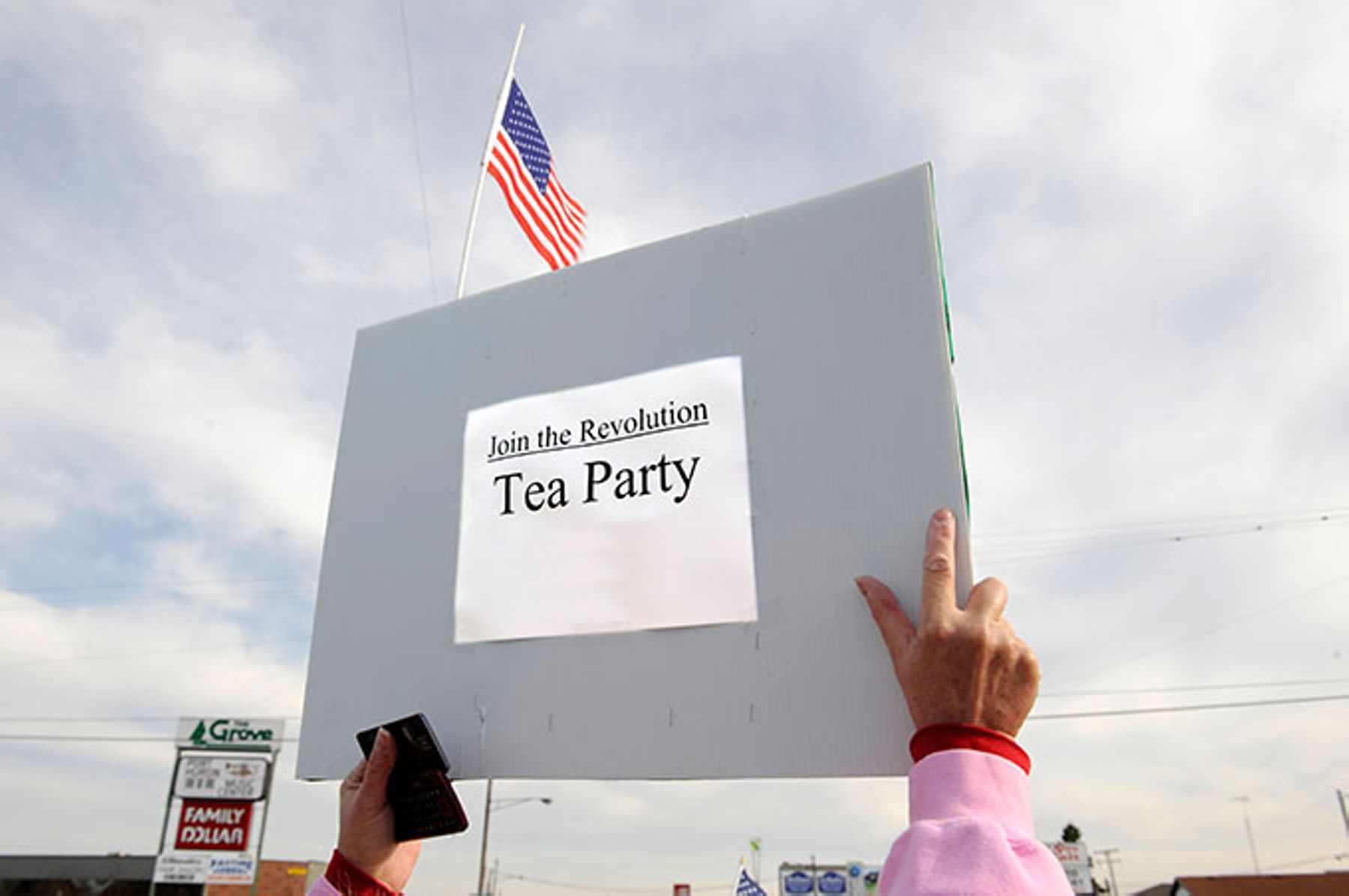
Ordinary citizen protesters protest taxes and other government wasteful spending.
While Tea Party gatherings were routinely likened to Nazi gatherings, they were not known for violence, and participants even cleaned up after themselves in city plazas and on the National Mall. (Dennis MacDonald/Alamy)

Donald Trump is often criticized—by some conservatives as well as liberals—for shattering norms of civility through insults and name-calling. It is true that his style of personal attack is unprecedented for a U.S. president. But he was also the first Republican to grasp intuitively the power of the Left’s chief rhetorical weapon. The tactic is captured in Saul Alinsky’s 1971 playbook, Rules for Radicals: “Pick the target, freeze it, personalize it, and polarize it.”

Instead of criticizing abstractions like capitalism or a corporation’s policies, Alinsky advised going after specific executives, just as union leaders had singled out the steel-company president they dubbed “ ‘Bloodied Hands’ Tom Girdler.” Instead of complaining about school segregation, accuse the superintendent of being a “racist bastard.” And to generate the “necessary hostility,” Alinsky warned against the “political idiocy” of acknowledging any redeeming qualities in one’s target: “One acts decisively only in the conviction that all the angels are on one side and all the devils on the other.”

Demonizing political opponents is second nature to Democrats, as the conservative columnist Charles Krauthammer observed in what he called the fundamental law of politics: “Conservatives think liberals are stupid. Liberals think conservatives are evil.” Every Republican president since Richard Nixon has been branded a racist, a fascist, or both—and routinely compared to Hitler. Smear campaigns against conservative Supreme Court nominees have been standard procedure for decades. When Zohran Mamdani promoted his tax-the-rich agenda by filming a video outside billionaire Ken Griffin’s Manhattan penthouse, or when protesters outside Tesla dealerships waved signs reading “Smash the Fash” and “Honk if You Hate Elon,” they were following Alinsky’s playbook. Though Alinsky warned that political violence was often counterproductive because it provoked backlash, he overlooked an obvious danger of his strategy: if you convince followers that an opponent is Satan or Hitler, some will conclude that murder is justified.

Mangione and his many admirers believe that he acted on principle. So did Charlie Kirk’s accused killer, whose justification—“Some hate can’t be negotiated out”—echoed the demonization of Kirk by trans activists and the Southern Poverty Law Center, which had put Kirk’s organization on its “hate map.” So did the transgender woman who traveled across the country intending to assassinate Brett Kavanaugh, whose address had been published online by Ruth Sent Us, a progressive group that adopted the unprecedented tactic of organizing protests outside the homes of conservative Supreme Court justices.

The attempted assassinations of Trump underscored the dangers of Alinsky-style demonization, but Democrats did not stop portraying him as a fascist bent on destroying democracy. When the latest would-be assassin opened fire at the White House Correspondents’ Dinner at the Hilton earlier this year, demonstrators outside carried signs reading “Death to the Tyrant” and “Death to All of Them.” Yet the legacy media continued to insist that right-wing violence posed the greater threat and that the recent wave of left-wing violence was an anomaly, driven by the polarizing effects of social media and Trump himself.

But the trend started centuries before the internet and Trump. For many leftists, polarization and violence aren’t regrettable aberrations; they’ve long been part of the plan.

In 1944, at the height of intellectual enthusiasm for socialism, Friedrich Hayek warned of an intrinsic moral difference between the Left and the Right. Many economists, expecting the Soviet Union soon to surpass the West, advocated a kinder, gentler form of Communism: “liberal socialism,” in which democratic central planners would manage the economy more efficiently and distribute wealth more fairly. Unlike capitalists pursuing their own interests, these planners would serve the common good.

Who would these planners be? Western intellectuals imagined benevolent experts much like themselves. Hayek saw something different. In The Road to Serfdom, he argued that once the goal becomes the common good—social justice rather than individual justice—people inevitably disagree about what that goal entails and how to achieve it. Yet anyone seeking political power must still unite and mobilize a mass of supporters.

“It seems to be almost a law of human nature,” Hayek wrote, “that it is easier for people to agree on a negative program—on the hatred of an enemy, on the envy of those better off—than on any positive task.” This not only unites allies but also provides a rationale for stripping enemies of the protections traditionally afforded to individuals. For classical liberals like Hayek, government’s chief role is to uphold the rule of law and protect the rights of individuals—the rights to life, liberty, property, and equality before the law. “The rules of individualist ethics,” he wrote, “are general and absolute; they prescribe or prohibit a general type of action irrespective of whether in the particular instance the ultimate purpose is good or bad.”

If your main goal is social justice, the moral rules change. “The principle that the end justifies the means is in individualist ethics regarded as the denial of all morals,” Hayek wrote. “In collectivist ethics it becomes necessarily the supreme rule; there is nothing which the consistent collectivist must not be prepared to do if it serves ‘the good of the whole.’ ”

The leaders of such a society, Hayek argued, would need to be ruthless to gain and hold power because a planned economy was destined to stagnate. Lacking the information conveyed by market prices, central planners could never allocate resources efficiently. As stagnation impoverished the population and critics challenged the regime’s vision of the common good, the government could remain in power only through censorship, coercion, and violence directed at opponents. Hayek captured the problem in the title of one of The Road to Serfdom’s most famous chapters: “Why the Worst Get on Top.”

Hayek’s warning finds ample historical support in Sean McMeekin’s To Overthrow the World: The Rise and Fall and Rise of Communism, a magisterial history of socialism that won the 2026 Hayek Book Prize. McMeekin, a historian at Bard College, shows that leftist movements have been demonizing enemies and rationalizing violence ever since Jean-Jacques Rousseau’s eighteenth-century vision of an egalitarian society. Rousseau never fully explained how such a society would determine the “general will” of the community. But he did argue that those who violated the social compact could be treated as “public enemies” and removed from society by exile or even death. During the French Revolution, whose leaders frequently invoked Rousseau’s ideas, more than 30,000 people were executed or died as victims of the Terror.
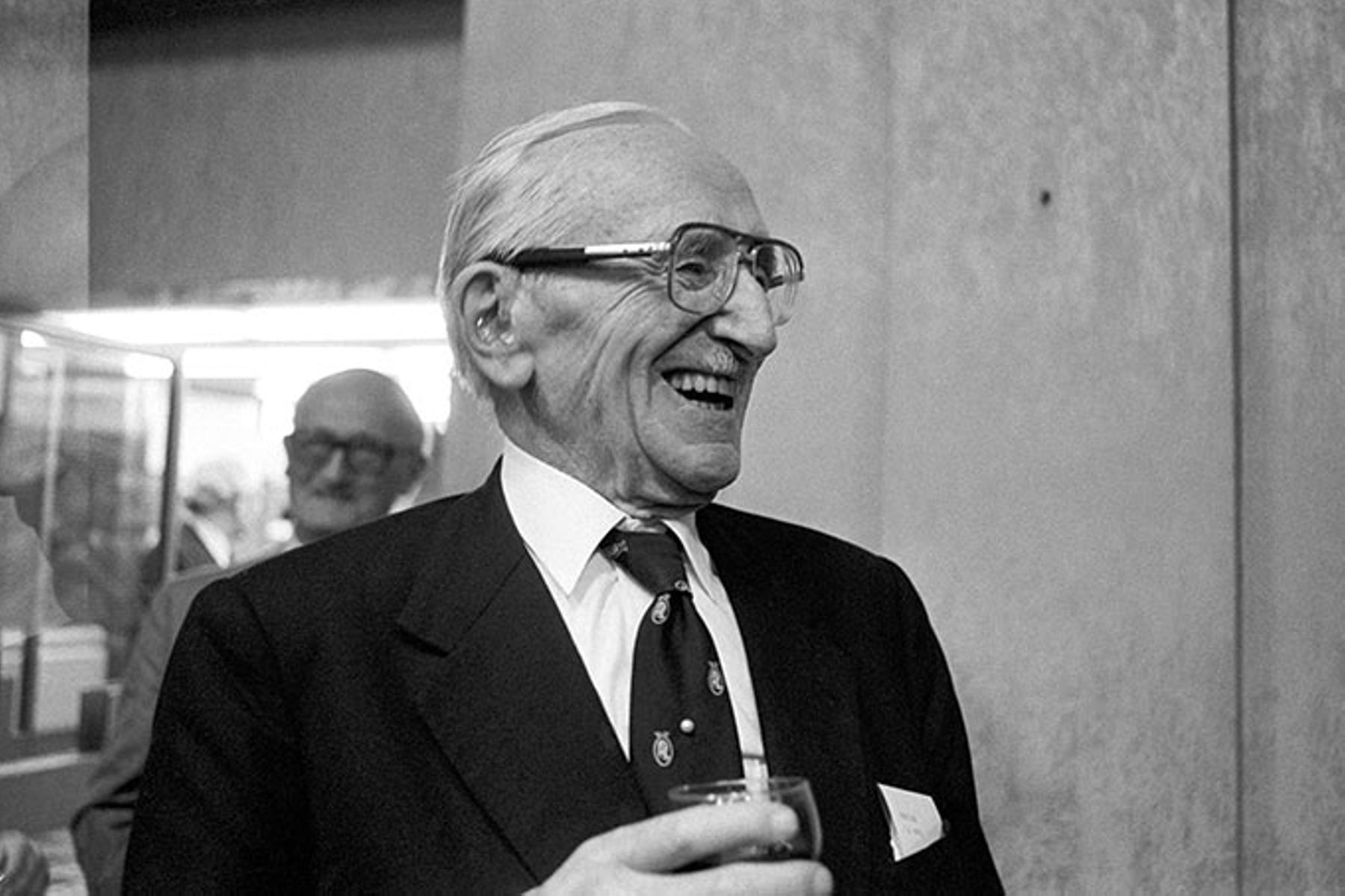
Nobel prize winning economist Professor Friedrich Hayek, 84.
Nobel Prize–winning economist Friedrich Hayek observed, “There is nothing which the consistent collectivist must not be prepared to do if it serves ‘the good of the whole.’ ” (PA Images/Alamy)

McMeekin isn’t surprised that so many Americans share Mayor Mamdani’s fondness for what he calls “the warmth of collectivism.” Devout leftists have long been willing to overlook or rationalize the mob violence, social upheaval, and ruthless leadership required to impose their vision of the common good. As McMeekin notes, no Communist government ever came to power through a free election or remained in power without violently suppressing dissent—yet that did not prevent Western academics and activists from celebrating Vladimir Lenin, Joseph Stalin, Mao Zedong, Fidel Castro, Ho Chi Minh, and Pol Pot as champions of the people’s will.

The deadly consequences of these dictators’ policies were often ignored, minimized, or even defended by Western journalists. Walter Duranty, the New York Times’s Moscow correspondent, won the 1932 Pulitzer Prize for portraying Stalin as a farsighted planner and popular leader attuned to the “Russian character.” Yet Stalin’s Five-Year Plan, which dispossessed farmers and forced them into factories and collective farms, sparked peasant uprisings that were crushed through executions and mass deportations to Siberian gulags. Duranty didn’t dwell on such details in his reports praising Stalin’s “flair for political management.” As millions perished in the terror famine of 1932–33, he published a poem in the Times, “Red Square,” offering precisely the kind of moral rationale that Hayek warned against:

Russians may be hungry and short of clothes and comfort,

But you can’t make an omelette without breaking eggs.

Unlike the American leftists of the twentieth century, today’s socialists spend little time defending Communist dictators such as Stalin and Mao (though Fidel Castro still has his admirers). If pressed about the atrocities committed under those regimes, they typically argue that “true Communism” or “democratic socialism” has never been tried—or that, in any case, the Communists were not as bad as the right-wing Nazis.

But this claim is as dubious as today’s myth that right-wing violence is more prevalent. If political violence is measured by the death toll, Communists were much worse. R. J. Rummel, the political scientist who coined the term democide to describe murder by government, estimated that twentieth-century Communist regimes were responsible for about 150 million deaths through executions, massacres, government-induced famines, forced labor in gulags, and other forms of state killing. In his ranking of “megamurderers,” the 21 million deaths under the Nazis put Hitler in third place, below Stalin’s 43 million deaths and Mao’s 77 million deaths.

These statistics, of course, don’t capture the full monstrosity of Hitler. He looms as the Great Satan of political violence in Western historical memory for his perpetration of the Holocaust and for starting a war that led to over 70 million deaths. But why is this violence categorized as right-wing? It’s convenient for today’s leftists to disavow fascism, but Hitler was the leader of the National Socialist German Workers Party, and American progressives greatly admired Mussolini’s big-government philosophy. Hayek regarded fascism as another form of collectivism, one that substituted racial and nationalist hatred for class hatred to empower central planners pursuing the good of das Volk—Hitler’s version of Rousseau’s “general will.” The paramilitary street battles between the Nazi Brownshirts and the Communists’ equally lethal Red Front Fighters’ League were, in this view, an internecine struggle between collectivists.

Trump’s mass rallies are often compared with Hitler’s, and they do differ from traditional Republican events. But the crowds at Barack Obama’s rallies could be just as fervent. Democrats have long been the party of mass mobilization, with streets filled by protesters chanting, “The people . . . united . . . will never be defeated!” In 2011, well before Trump and George Floyd provided the latest catalysts for such demonstrations, Ann Coulter documented this tradition in Demonic: How the Liberal Mob Is Endangering America. The bestseller, which traces the history of left-wing mob violence—and debunks accusations against the Right—draws a Hayekian distinction between the American and French Revolutions.

Unlike the American Founders, whose commitment to the “unalienable rights” of individuals is celebrated on our national holiday, the French revolutionaries invoked Rousseau’s “general will” and embraced a series of what today’s protest consultants would call “direct actions,” beginning with one still commemorated annually by chapters of the Democratic Socialists of America. When the governor of the Bastille—a nearly empty prison—tried to surrender peacefully, the mob outside rejected the offer, stormed the fortress, murdered the governor and several guards, mutilated their bodies, and paraded through the streets with the governor’s head on a pike. Noting that this revolutionary triumph is now fondly remembered each Bastille Day, Coulter writes: “It would be as if this country had a national holiday to celebrate the L.A. riots.”

When it is not celebrated, leftist mob violence tends to be forgotten or blamed on the other side. Historians’ favorite example of capitalist brutality during the Gilded Age, the 1892 Homestead Strike, is commemorated near Pittsburgh with a monument honoring workers killed while striking “in defense of their American rights.” Yet these “Martyrs of the Monongahela,” as they are known in labor lore, were part of an armed mob that initiated the violence—first by occupying Andrew Carnegie’s steel mill, then by massing on the banks of the Monongahela River to confront a barge carrying Pinkerton detectives sent to reopen it. After a 12-hour battle in which three Pinkertons were fatally shot, the detectives surrendered and were forced to run a gauntlet of people who robbed them, tore off their clothes, pelted them with stones, and clubbed some into unconsciousness. The Pinkertons receive no mention on the monument.

Journalists apply a similar double standard to contemporary political violence. Tea Party rallies were not known for violence—participants famously cleaned up after themselves in city plazas and on the National Mall—yet Democrats and mainstream journalists routinely compared them to Nazi gatherings. Reporters also eagerly amplified accusations that Tea Partiers at one rally had shouted racial slurs at black members of Congress. In response, the late Andrew Breitbart offered $100,000 for evidence. Yet despite the presence of countless journalists and camera phones, no one ever came forward to substantiate the claim.

Journalists weren’t so keen on drawing Nazi parallels with masked Antifa members, who repeatedly disrupted conservative speeches and marches (a common tactic of the Brownshirts) around the country, attacking police and conservatives with clubs, bricks, fireworks, and Molotov cocktails. While a handful of independent journalists—notably Andy Ngo, who was hospitalized with a brain hemorrhage after getting pummeled by masked Antifa “counter-protesters”—covered the group, the mainstream media largely ignored it. The few articles were often uncritical or even sympathetic.

The George Floyd riots of 2020 were the costliest civil disturbance in American history, causing more than $1 billion in property damage. Yet media coverage was epitomized by the CNN chyron displayed as a correspondent stood before a burning building: “Fiery but mostly peaceful protests.” Journalists continued to portray Black Lives Matter as a noble movement, ignored much of the violence associated with the unrest, and downplayed it by citing a statistic that 93 percent of the protests were peaceful—as though that excused the property destruction and two dozen deaths. As usual, audiences were told that right-wing violence posed the greater threat.

This claim keeps getting cited, despite obvious biases and other flaws in the statistics, as journalist Batya Ungar-Sargon and others have observed. In identifying, counting, and classifying violence, most of the statisticians depend heavily on the legacy media’s selective coverage, as well as on reports from the Anti-Defamation League and the Southern Poverty Law Center, left-leaning groups with an incentive to generate donations by exaggerating right-wing violence.

The SPLC, which has amassed a $700 million endowment with this tactic, was discredited long before the recent federal indictment accusing it of spending millions of dollars to manufacture right-wing extremism—like paying for Ku Klux Klan members to buy crosses and neo-Nazis to coordinate travel to the infamous Charlottesville protest in 2017. Scholars and journalists have shown that the group deliberately ignores left-wing extremism while falsely reporting “a rising tide of hate” on the Right. Its blacklist of dangerous “extremist” groups includes Prager University and Moms for Liberty—but not Antifa, which the SPLC argues should not be designated as a terror group.

Journalists often cite statistics from the Prosecution Project, which counts only incidents resulting in felony charges. Yet its right-wing category includes questionable cases, such as Aryan Brotherhood members convicted of assaults and murders tied not to politics but to drug trafficking, now the group’s principal activity. And the left-wing category is likely undercounted because many violent leftists in Democratic jurisdictions are never arrested, let alone prosecuted for felonies.

The three months of nightly protests in Portland, Oregon, in 2020 caused over $15 million in property damage and more than 450 injuries to police officers and federal agents, but the district attorney declined to prosecute most of those arrested. In Manhattan, a man in Union Square who painted “Slave Owner” in huge yellow letters on the granite base of the George Washington statue was charged with a misdemeanor, so he does not appear in the leftist statistics, but the right-wing category includes a driver in Delray Beach, Florida (a Democratic stronghold), charged with a felony for leaving skid marks on a street painted with a Pride rainbow.

The statisticians at the Center for Strategic & International Studies are frequently cited in discussions of political terrorism, but they classify anti-Israel violence as “ethnonationalist” rather than leftist. Their left-wing tallies thus exclude the murders of Israeli Embassy staffers, the firebombing that injured 15 participants on a pro-Israel solidarity walk, and other acts of violence by pro-Palestinian activists. The tallies also exclude the attacks on Tesla dealerships (classified as “economic vandalism” rather than terrorism), as well as most of the violence associated with the Floyd riots and ICE protests, because these incidents are deemed not to meet various requirements for terrorism (such as being premeditated and causing “broad psychological impact”).

Shortly after Charlie Kirk’s murder last year, the media trumpeted a calculation from the Cato Institute that, since 1975, right-wingers had committed five times as many politically motivated killings as left-wingers. It was the usual accusation, but this time it prompted rebuttals.

Conservatives complained that virtually none of the supposedly right-wing killers was pushing an agenda endorsed by Republicans and that Cato’s definition of politically motivated violence unfairly excluded lethality by leftists. The Conservative Action Project listed methodological objections in a letter to Cato, urging that the study be withdrawn. (Cato demurred.) A conservative writer, Jennifer Emick, posted her own tally of political murders since 1975, excluding some on Cato’s list and adding others. She concluded that left-wingers had committed twice as many as right-wingers.

It is refreshing to see some conservatives finally challenge the myth of right-wing violence, but they have less incentive than leftists to keep the argument going. Conservatives do not make a living sending angry crowds into the streets, so they have less need for statistics that distract from the resulting mob violence. Nor do they depend on mobilizing the masses against the latest Hitler. But the Left’s professional activists will always need to find a new demon to rally the troops—and then pretend it was the other side that started the war. 

Donate

City Journal is a publication of the Manhattan Institute for Policy Research (MI), a leading free-market think tank. Are you interested in supporting the magazine? As a 501(c)(3) nonprofit, donations in support of MI and City Journal are fully tax-deductible as provided by law (EIN #13-2912529).


Read the whole story
bogorad
5 days ago
reply
Barcelona, Catalonia, Spain
Share this story
Delete
Next Page of Stories